
The Bog
Snowshoeing with Thoreau
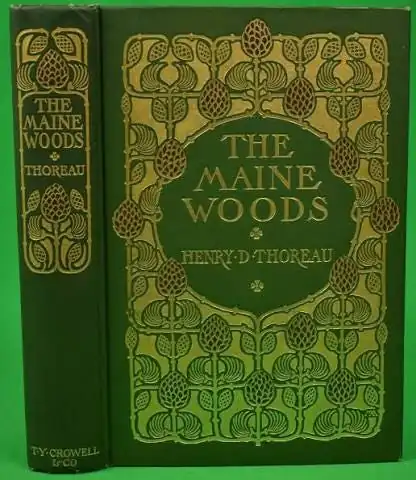
In his book The Maine Woods, Henry David Thoreau describes a trip he made during the autumn of 1853 to Chesuncook, Maine. Emulating Thoreau, I decided to take a trip of my own to that same off-the-beaten path village, albeit in the winter, my preferred time of year to travel.
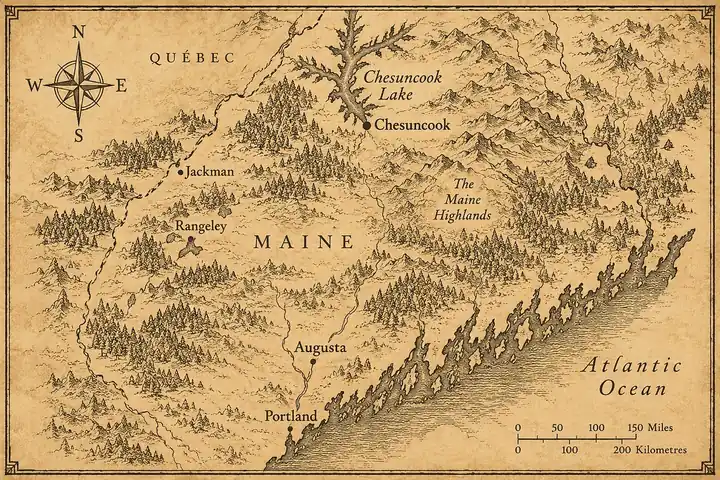
Chesuncook is perhaps the most remote town in the Northeast. It can be reached only by boat, plane, skidoo, or snowshoes. I got a lift by skidoo from Greenville for most of the distance, then snowshoed the remaining mile or two. Thoreau himself traveled there by canoe. Once there, he followed his meals with a dessert made up of (he wrote) “a large slice of the Chesuncook woods.”
Chesuncook turned out to be a collection of backcountry cabins and tarpaper shacks with rusted bedsprings on their porches. A few were in such a decrepit condition that I felt a mere kick would reduce them to rubble. Not surprisingly, there weren’t any signs saying “Welcome to Chesuncook.” There was no signage at all, in fact.
From the photo I’d been sent, which showed a pair of moose antlers nailed above a window, I could easily locate the place where I’d be staying. It was a rustic cabin rather more luxurious than the one Thoreau occupied when he visited Chesuncook. But almost any cabin would be more luxurious than his cabin, which he described as being “a slight departure from a hollow log.”
After I ducked the jagged icicles hanging from the roof above the door, entered the cabin and saw a cot for my sleeping bag, a kerosene lantern, a wood cookstove, a coffee maker, and a small compact fridge. I also heard the melodious chattering of house mice in the laths. What a gratifying place to spend a few nights. Not a few days, because I would be outside snowshoeing.
The wood stove, like the Canaanite god Moloch, demanded a burnt sacrifice, so I retrieved several logs from the porch and put them into the stove, whereupon it indicated its appreciation of this deed by clicking and roaring. In a short time, the temperature in the cabin rose to 55 degrees Fahrenheit.
The next morning I visited the cabin’s owner. “Do you mind not having wifi?” he asked me.
“Of course not,” I replied. “Why would I want to drown my soul in a viral sea? By the way, how many people are living in the village this winter?”
“Nine, maybe ten,” he said.
Either would be a healthy number, I thought. Thoreau would have agreed.
A short while later, I slipped my boots into the harness of my ash-and-rawhide bear paw snowshoes and began walking along the shore of Chesuncook Lake. Where the lake wasn’t covered by snow, its frozen water seemed to be a giant sheet of glass surrounded by a black frieze of conifers. What at first looked like an assemblage of outhouses punctuating this glass turned out to be ice fishing shanties, from one of which I heard these words: “Hey! I caught a big one!”
Myself, I wasn’t interested in either a big one or a small one, so I headed into the woods and began following the hieroglyphic trail of a snowshoe hare with the twin troughs of my own snowshoes. Instead of seeing that large-footed lagomorph, I ended up gazing directly at a rusted 55 gallon oil drum. I realized I needed to head further if I wanted to escape the inventions of humankind.
I now twisted my way through a forest of tightly-knit black and white spruce, hemlock, balsam fir, and birch trees. All at once I saw an albino moose twenty or so feet away. Perhaps one in 20,000 moose is an albino, so this was a remarkable creature. But it turned out not to be remarkable, a perfectly ordinary moose that had walked into a snow-laden branch. It soon shook off a large amount of the snow and became brown again.
The next day I headed out to do some more snowshoeing. The only sound in all the world seemed to be the squeaking sound of my snowshoes as they compressed the ice crystals in the snow beneath them, along with the twitters and trills of chicadees. I had succeeded in escaping (to quote Thoreau) “the noise of my contemporaries!”
On a birch tree, I saw a reddish-brown liverwort (Frullania sp.) embracing that tree with its thin, fingerlike rhizoids. It was probably photosynthesizing even though the temperature was probably around 20’F, for liverworts can photosynthesize at very low temperatures. Few other plants boast this talent.
Reputedly, the ancestors of liverworts emerged from the sea 400,000,000 or so years ago to become among the very first colonizers of land. I asked the liverwort if this was true. There was a long silence, as if the liverwort was contemplating an answer, and then I seemed to hear the following reply:
“I don’t know, and I don’t care. What matters is that I’m alive right now.” The liverwort seemed to be quoting Thoreau, who wrote: “You must live in the present.”
Later that same day, I was snowshoeing through the woods when I saw a cornice and quickly swerved away from it. This was a good move, since a cornice is a mass of overhanging snow that extends into thin air and thus offers the prospect of an avalanche burial to the unwitting snowshoer or skier…but it also wasn’t such a good move, because I swerved away so dramatically from the cornice that I snapped the moose hide that laced one of my snowshoes. I hadn’t greased this lacing in several years, and it had become bone dry. My (as the saying goes) bad.
I tied the now useless snowshoe to my rucksack with a bungee cord, then began hobbling with one leg deep in the snow nearly up to the confluence of my anatomy and the other leg still in the snowshoe only a few inches deep into the snow. I imagined Thoreau, if he happened to see me, saying to one of his naturalist friends, “Come quick! I think I’ve found an unknown species!”
If I had a cellphone, I could have called for help. But I don’t bring a cell phone on trips like this because I don’t like to be tied to the world I left behind. Whatever good, bad, or indifferent news someone has for me can wait.
Thus I continued my demented penguin waddle through the woods, heading in the general direction of Chesuncook Lake. Meanwhile, the sherbet sky was rapidly fading to a dark sherbet color. No problem, I told myself, because I have a flashlight. As it turned out, the flashlight’s batteries were dead.
The temperature was now only a few degrees above zero. If I was forced to spend the night here, I could always, well, I didn’t want to think about it. For I had no sleeping bag, no tent, and only a single Cliff bar to satisfy my hunger. Thoreau mightn’t have had any Cliff bars, but he had a variety of other foods.
On and on I went, trying and often failing to find my previous steps in the snow. I would often spend an inordinate amount of time trying to lift my snowshoe-less foot out of the snow, and such was the difficulty of this lifting that I occasionally toppled over and ended up almost as deep in the snow as my foot had been. When I stood up, I might have looked like the human equivalent of an albino moose.
All of a sudden I noticed an object that I wouldn’t have welcomed at any other occasion in my life — the 55 gallon oil drum I mentioned earlier. I also saw the flickering kerosene lanterns in the ice fishermans’ huts on the lake and a shout of “I caught a big one.” I had managed to survive my demented waddle in the woods.
Once I reached the lake, I took off my remaining snowshoe and tromped on top of the hardened snow to my cabin. It was now sufficiently dark that I didn’t see the fangs and tiers of icicles hanging from the cabin’s roof, and my head smashed into several of them. Discomfort be damned, I thought, for at least I’ve been snowshoeing in the back of beyond with Thoreau…and at least I’d been able to have a chat with a liverwort.
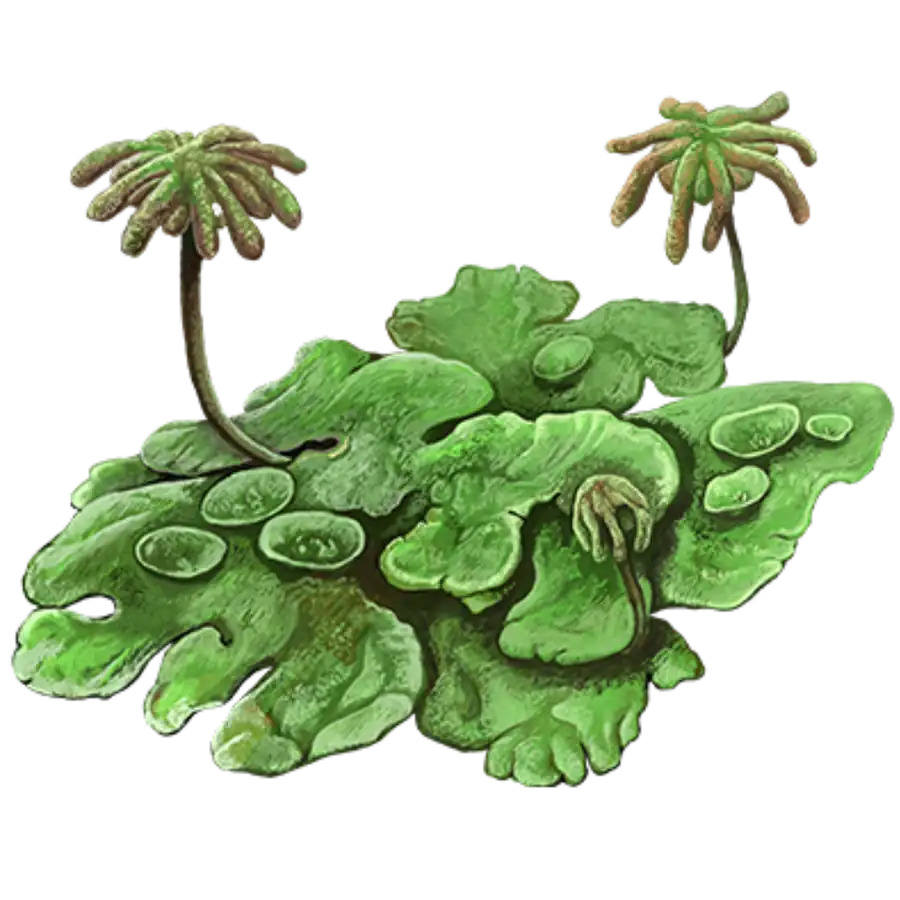
“Liverwort” by DataBase Center for Life Science (DBCLS), licensed under CC BY 4.0.
More from the Bog
- Bad Doggy! November 20, 2026
- How Bear Piss Changed My Life November 13, 2026
- Among Headhunters November 5, 2026