Blogs fill me with a certain disgust, mostly because the word blog seems like it’s an amalgam of blah, bah, and blather. So, instead, I’d like to call what I’ll be writing for this site a bog. Bogs, to me, are beautiful, especially in the fall, when the reds of sphagnum, the teals of bog rosemary, and the whites of cotton grass suggest a painter’s palette. Unlike blogs, bogs smell of earth and life. My friend and bog expert Charles Johnson thinks wondrously strange gods inhabit bogs. So do I. Those gods have created (for instance) carnivorous plants like the sundew, the pitcher plant, and the bladderwort, the last of which can spring its trap on an unsuspecting insect in as little as two-thousandths of a second. Perhaps the rarest of all fungi, Echinodontium ballouii, can only be found in a bog. My favorite salamander, the four-toed salamander, is a bog inhabiter; I have never found it in a blog (a terrible habitat for a herp), but I have found it in several bogs in the Northeast. And here’s a parting salvo: bogs are timeless, whereas blogs are transitory, indeed downright evanescent.
Wherever I happen to go, I always take a pencil with me. Write down that damn story immediately, the pencil I have in my hand will declare, and I feel obliged to obey its request. Sometimes I’ll scribble the story in question while standing up, sometimes while seated on an alien doorstep, and sometimes while chatting with another person. For pencils are my lords and masters.
Often I’m sitting in a coffee shop, writing down a story. When this is the case, I tend to be the only person in that coffee house who’s not tapping on a laptop. Such tappers will often gaze oddly at me, as if they’re wondering what sort of early primate I might be. They might also be asking themselves what sort of peculiar object I’m holding in my hand.
Such has been my devotion to pencils that while traveling in Greenland, I acquired the name Allaut, which means pencil in Greenlandic. “Greetings, Mr. Allaut,” locals would say to me. I once offered a pencil to an elder, suggesting that he write down why he was constantly beating a drum. “I beat a drum so I won’t grow old,” he wrote on the note paper I gave him. Such wise words!
Let’s remain in Greenland. So there I was, wandering along a street in the small East Greenlandic village of Ittoqqortoormiit and taking notes on the vociferous nature of the sled dogs, the artifact-selling locals (“You can get rid of evil spirits with this carving.” they would say to me), and the not necessarily pristine weather.
All at once I found myself standing next to a rather gruff-looking local guy who was flensing a seal skin with a sharp knife. “Stupid takornaniaq [tourist}!” the man shouted, then pointed his knife at me in a manner that suggested I might be the next creature he would flense.
I had to think fast. Telling the Greenlander that I wasn’t a stupid tourist, but a stupid ethnographer probably wouldn’t work. Nor would running away from him, for — given the icy ground — I might slip and fall, then receive a different sort of wound than a stabbing might give me. Confronting the Greenlander seemed out of the question.
What to do? I noticed a crucifix dangling from the fellow’s neck — a not uncommon ornament in those parts. So I took a pair of my #2 pencils and pressed them together vertically and horizontally in front of my chest, thus creating a simulacrum of a crucifix. Then I bowed slightly. So, in fact, did the Greenlander. Indeed, there seemed to be a somewhat reverential look on his face.
A few minutes later I sat down among some yowling sled dogs and documented my use of pencils as religious objects. I also documented my use of them as a way of warding off a potential injury. And not surprisingly, I used one of those pencils in the crucifix to write down the very words in this story.
To the best of my knowledge, no one had ever given serious attention to the fungi (i.e., mushrooms) of the Kuujjuaq region before my August 12-18, 2007 visit. During this visit, I collected ~ 60 different species, including a few — but only a few — good edibles, and with such a relatively large species count, I disproved the popular notion that there aren’t any fungi in the North. Actually, there would hardly be any plant life in the North without fungi, or at least without so-called mycorrhizal fungi. For the underground portion of these fungi, known as a mycelium, shuttles much-needed nutrients, especially nitrogen, to the roots of 95% of all plants and trees in both the boreal forest and the tundra. If it weren’t for this shuttling service, most of the plants and trees in question would not survive.
Map of Nunavik villages by Jeangagnon, available on Wikimedia Commons, licensed under CC BY-SA 3.0.
In and around Kuujjuaq, I investigated three more or less different habitats: northern boreal forest (southwest of Kuujjuaq), tundra (north and west of town), and the mixed- disturbed area between the airport and the Koksoak River. Most of the fungi I identified in these habitats were host-specific mycorrhizal species. For example, Lactarius rufus (Red Hot Milky) and Leccinum scabrum (Birch Bolete) grew with spruce and dwarf birch, respectively. The habitat with the greatest number of species was the area between the airport and the Koksoak River. For it’s usually the case that the greater the variety of plants and trees, the greater the variety of fungi. On the other hand, the habitat with the largest fungal biomass was — perhaps surprisingly — the tundra. One reason for this is that there isn’t as much competition for space in a tundra as there is in a forest or a mixed habitat. Another reason: the large, anchoring roots of tundra plants and trees seem to inspire fungal mycelia to produce fruiting bodies.
Among local Inuit, there’s almost no tradition for harvesting fungi. Mushrooms are referred to as tunitniqingit, caribou food, and the general sense I got from speaking with elders was that they were fit for caribou, but not human consumption. One elder did mention that the puffball known as a pujuolak was used medicinally when he was growing up. If someone cut himself, he’d place the soft yellow spore mass of a pujuolak on the wound, then tie it there with a string. The puffball would keep the wound from getting infected and also aided in the healing process. Strange as this might seem, it does have a basis in science, since some fungi (pencillin is, after all, made by a fungus) have strong antibiotic properties. However, the medicinal use of pujuolaks seems to have died out in the Kuujjuaq area.
Taylor, G. M. (2006). Birch Bolete, Leccinum scabrum [Watercolour painting]. Landcare Research (PDD 113075), Licensed under CC BY 4.0 via Wikimedia Commons.
As part of this project, I was asked to identify potentially harvestable mushrooms, and the two species I would most recommend are Leccinum scabrum (Birch Bolete) and Leccinum insigne (Aspen Bolete). The field differences between these two boletes are slight — L. scabrum usually has more pronounced projections on its stalk, and L. insigne typically stains purplish-grey, then black when cut or bruised. As both are good edibles, there’s no need to make a positive ID before collecting them. Also, both fruit in considerable quantities during the mushroom season, August and September. Since they likewise fruit in considerable quantities in other parts of Canada, I would not encourage attempts to market them. Note: Another good edible, Rozites caperata (Gypsy), fruits in the area, but as there’s a slight risk of confusing it with a poisonous Amanita, I would not recommend it to beginners.
As a cautionary measure, I asked Michael Kwan to test tissue samples of several Leccinum specimens for toxic elements. After all, the harvest of edible mushrooms in certain parts of northern Europe has occasionally been curtailed due to pollutants in the air or the ground. The result of these tests was reassuring. There were measurable amounts of cadmium and mercury in the mushrooms’ caps, but the concentrations were not high enough to be a health concern. Lead was hardly detectable, and nickel and arsenic levels were both very low. Thus the two Leccinums are safe to collect (idea: give them an Inuktitut name).
With this project, I hope I have laid a useful foundation for the future study of fungi — whether by me or someone else — in the Kuujjuaq region, indeed in Nunavik itself.
Once upon an earlier time I was a prisoner war at an academic institution. Behind metaphoric bars, I was obliged to teach remarkably ambiguous works of literature. Likewise I was obliged to attend meetings the main purpose of which was to determine when the next meeting would occur.
I liberated myself by going to live in the West of Ireland. Specifically, I went to live on Inishbofin, an island off Connemara where storytelling was a way of life. Wherever I went on the island, I would hear stories that were ancient myths, wonder tales, or self-contained monologues.
Inishbofin by Andrew Kearns shared under a CC-A-2.0 license via wikimedia commons.
I also heard a plenitude of jokes. After all, jokes are stories, too. Here’s an example: a young lad visits the local priest and says, “Father, I have sinned.”
“What is your sin, my son?” the priest asks.
“I’ve had sexual intercourse with Miss Kelly, the postmistress.”
“That is a sin, my son, and as penance I ask you to go back and do it again.”
“A good story fills the belly” runs an old Irish proverb. This suggests that stories can in fact sustain life. I told a fellow on Inishbofin that there were tribes in Ghana who believe you can keep a dying person alive by telling them stories. “We believe in exactly the same thing,” the fellow replied.
Then came the Monster. Frankenstein and Dracula, by comparison, were wimps. This was a horrific entity that grabbed and swallowed its victims. It performed this nasty deed without the use arms or a mouth, for it lacked both of these items. To what am I referring? The island’s first television, which was installed in the local pub during my visit.
The Monster demanded the attention of all its viewers. Thus stories, not to mention jokes, could not be told in its presence. A fellow might utter these words: “Long, long ago there was a banshee keening at…” To which someone might say “Sh-h-h, you’re interfering with The Last, Late Show.” That someone would likely be a younger person.
Goodbye storytelling? Not right away. For certain folks, especially older ones, would leave the pub and stand outside in the rain, talking with each other. I would join them and hear stories such as the one about the fellow who married a woman even though he knew she was a selkie — i.e., part seal, part human.After all, such a woman was much better at fishing than he was…
Here I should mention that younger folks tended not to leave the pub. For they were usually stuck in the Monster’s grasp. Plus, they had no interest in standing outside in the rain. As a result, the Monster tended to procreate, and slowly but surely a goodly percentage of the houses on the island ended up with TVs.
Now back to yours truly. Given the popularity of the Monster, I had no choice but to travel back across the Pond and imprison myself again behind the stone bars of academia.
A Luddite Lexicon is a dictionary of words and phrases that speak out against the technological matrix currently enveloping our planet. Inside that matrix, a mobile phone is a religious object, and a television is an addictive toy. Almost everywhere you go, automotive vehicles follow each other like a conga line of dogs in heat – whatever happened to feet? The book will offer you a healthy, often amusing alternative to that matrix in the form of a connection to the natural world.
“Thank goodness for A Luddite Lexicon, which offers a sharply humorous corrective to the madness of progress. It may even inspire you to pick up a hammer.” – Paul Kingsnorth, author of Against the Machine
“This book is the antidote to a world gone wrong. Read it and pass the wisdom on to your children.” – David Breithaupt, reviewer for the L.A. Review of Books
“Lawrence Millman – the Ambrose Bierce of his time – elevates curmudgeonliness to an art form here.” – Bill McKibben, author of Here Comes the Sun
“A Luddite Lexicon is a total treat! A delightful send-up of where we’ve arrived in this crazy age.” – Robert Pyle, author of Nature Matrix and Wintergreen
So there I was, swatting mosquitoes on Victoria Island in the Canadian Arctic. I didn’t come to this relatively remote island because I wanted to engage in that vigorous activity, however. Rather, I came because I wanted to escape what writer Norman Douglas referred to as “the perambulating lunatic asylum of civilization.”
But I also came became I wanted to find an Arctic tadpole shrimp (Lepidurus arcticus), a species that’s neither a tadpole or a shrimp but it’s own particular breed. A scientist friend alerted me to the presence of this not particularly common crustacean on Victoria Island.
Here I should mention that L. articus is the northern cousin of Triops, a species that’s best known as an inhabitant of desert water holes in the American Southwest. The main difference is that Triops species have three eyes (“Triops” means “three eyes”), while L. articus have two. Another difference is that Triops are relatively common not only in the Southwest, but on the internet — you can purchase a larger number of their eggs on Amazon and watch them hatch in a terrarium. Not so L. atticus, which can be found only in the wild.
Between swats, I peered into a shallow moraine pond with the hope of finding the object of my scrutiny. I peered, and then peered some more, but all I saw was a reflection of my own face in the water. Oh yes: I also saw quite a few mosquito larvae swimming around at the bottom of the pond.
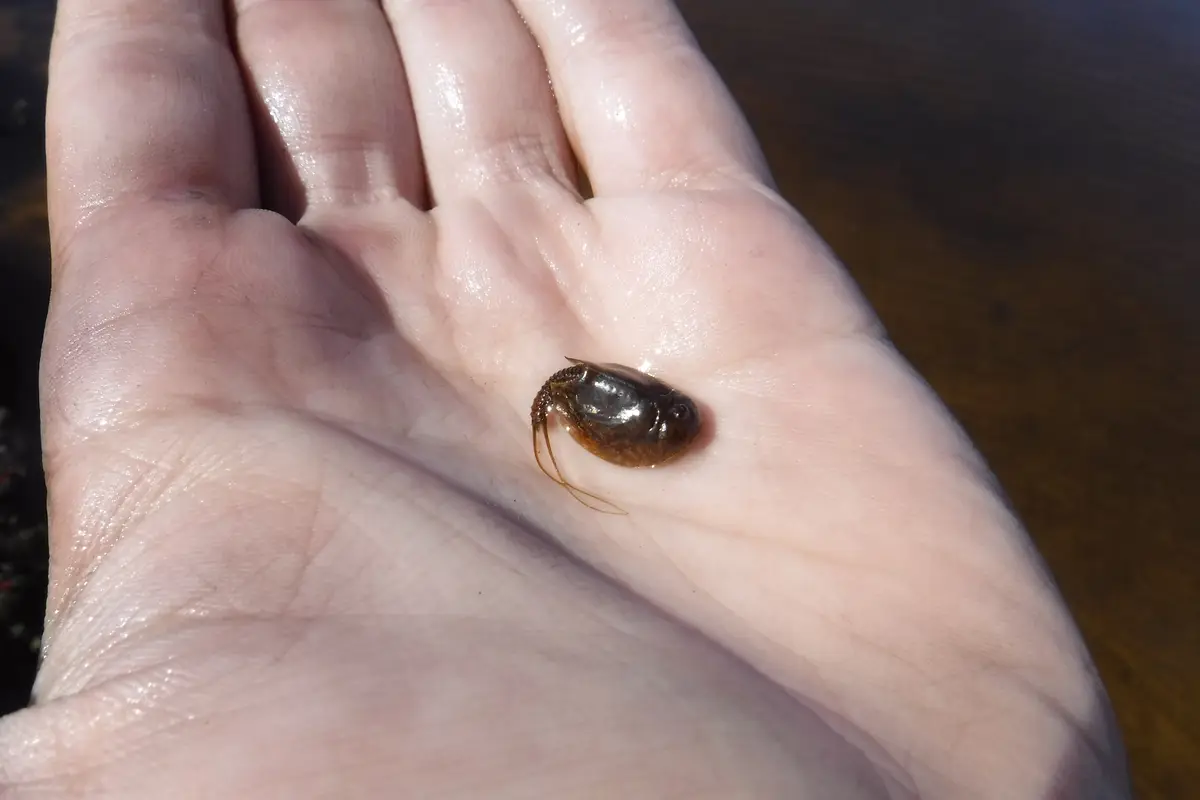
I wandered over to another moraine pond, gazed into it, and all of a sudden I saw a horseshoe crab, albeit a miniature one —its humped carapace was probably no more than an inch and a half long. The critter was a L. articus!
I was far more pleased by the sight of this relatively small arthropod than I would have been if I had found a bag of gold!
I reached down and gently picked up the L. articus and ended up holding in my hand a creature which happened to be one of the planet’s oldest living species. Dare I say that this gave me a sense of primordial delight? The creature in question did not seem to feel delight, though. Its twin poppyseed eyes stared at me with what seemed like obvious displeasure. Clearly, this living fossil did not like being held by a latter-day species, for it tried to spike my hand with its telson, a pointed tail-like appendage on its abdomen.
I knew L. articis liked to eat mosquito larvae, so I tried to capture a few from the bottom of the pond, but they kept swimming away. Then I wondered if it might like to eat adult mosquitoes as well, so when one of these blood suckers landed on my arm, I swatted it, and then put carcass the next to the L. articus in my hand. Ah, success, I thought, when the L. articus began to wiggle toward the mosquito…
…but then it continued wiggling until it escaped my grasp and splashed into the pond, a much healthier habitat than the palm of my hand. Oh well, I thought, at least I’ve had the pleasure of getting up close and person with an early Jurassic survivor…
picture by W.Wing, 1 American Tadpole Shrimp, adult 2 Arctic Tadpole Shrimp, adult 3 Caribbean Fairy Shrimp, adult male (3a: second antenna from lateral, 3b: gonopod from lateral) 4 Caribbean Fairy Shrimp, adult female (4a: gonopods from ventral) in the public domain in its country of origin and other countries and areas where the copyright term is the author’s life plus 70 years or fewer. via https://commons.wikimedia.org/wiki/File:PZSL1852PlateAnnulosa22.png
First Posted on December 6, 2025 by Lawrence Millman
Hardly anything, not even an infant asleep in a stroller, raises the oxytocin of certain people to such Everest-like heights as the sight of a wide-eyed, round-headed Canis familiaris, otherwise known as a dog. Words like lovable, adorable, and cute emerge immediately from the viewer’s mouth. But the animal in question does not have a lovable relationship with the environment. Quite the contrary. I don’t simply mean the fact that it barks at or runs after birds, especially breeding ones, thus causing a dramatic reduction in their population. I mean something far less obvious — the answering of nature’s call, an act that can transform nature itself into a veritable minefield.
Chacun_son_tour Charles J Sharp, Public domain, via Wikimedia Commons
In the U.S., domesticated dogs deposit approximately ten million tons of fecal matter a year in yards, urban green spaces, and forested areas. Here I should say they once deposited that amount. For dog ownership has risen dramatically during the current pandemic, and the volume of dog poop has risen dramatically as well. What becomes of that poop? Some people might think they’re being eco-minded by putting it into an aquamarine plastic bag, then tossing that bag in the trash, but they don’t seem to realize that they’re contributing to the plasticization of the planet (a plastic bag in a landfill can take upwards of 500 years to decompose). Quite a few others leave a poop-filled plastic bag on the ground or simply fling it away — are they expecting the poop fairy to remove it?
Good boy or good girl, a cute little dog’s owner might say after their canine companion has pooped. But since that typically brown, squishy poop itself isn’t cute, many owners will leave it exactly where it’s been deposited rather than put it in a plastic bag. There it will remain, slowly but surely biodegrading, and (as you’ll soon find out) wreaking havoc on its habitat as it does so. By contrast, the poop of wild mammalians breaks down quickly, and the soil benefits from their poop’s nutrients, which includes all sorts of organic matter.
Since one’s canine companion has dined primarily on processed foods, its poop contains nitrate compounds that tend to reduce the oxygen level in the soil. The change in soil chemistry can be quite harmful to plants…or I should say native plants. This change can either kill them, cause their leaves to drop prematurely, or prevent them from producing any flowers. But invasive plants have a literal field day in what might be called the immuno-compromised soil. For example, garlic mustard is far more common in areas where dogs have been walked than in other areas. Not surprisingly, those other areas are more biodiverse than the areas with dogs.
Garlic Mustard blooming at the edge of a city yard in Pittsburgh shared by Cbaile19 under a Public Domain License via Wikimedia.com
According to the FDA, one gram of a dog’s poop boasts roughly 25 million fecal bacteria, including salmonella, giardia, Staphylococcus, and E. coli. These bacteria get transported through the soil and often contaminate local groundwater, rivers, and waterways. Thus you should be very careful about your drinking water, unless you’d like to get a serious bacterial infection. And be careful what you touch, too. For in your dog’s poop reside roundworms that can cause recurrent diarrhea as well as eye and lung infections.
If you think your dog’s pee is less pernicious than its poop, you’ve got another think coming. For this pee is extremely rich in urea, an acidic compound that contains 48% nitrogen. A little nitrogen is not a bad thing, but too much nitrogen, well, consider a study done in England a while back that documented dogs peeing on lamp-posts. Constant peeing caused the bases of those lamp-posts to crumble. In 2015, a lamp-post fell onto a car in San Diego, narrowly missing the driver. In all probability, dog pee was the cause of its fall.
It’s an easy segue from lamp-posts to trees. In order to mark or counter-mark what they consider their territory, male dogs look around for something vertical, and voila! there happens to be a tree. Up goes a leg, and out shoots a flow of urea that goes down the tree’s trunk and into its roots. If enough dogs pee on a tree, it’s probably goodbye to the tree. A fungus killed that tree, a lot of people will think, not realizing that man’s (and woman’s) best friend caused the tree’s demise. It shouldn’t be a surprise that trees along forested paths have suffered more from the flow of canine urea than trees off those paths.
So what’s the best way to solve the problem I’ve just described? Perhaps exchange your dog for a more eco-friendly pet such as a goldfish or a canary? This wouldn’t work, since neither of these critters will raise your oxytocin very much. How about giving up your best friend for adoption? That won’t work, either. For you’d be simply bequeathing the dog to a different owner, who would also take it on several lavatorial walks a day.
Personally, I think the best solution is what I’ve tried to do in this essay — inform folks about the negative effect their pet dogs can have on the natural world. Otherwise, there will be more and more incidents like the one I experienced a few years ago, when I was walking through a wooded area (walking myself, not a dog) in Cape Cod. I happened to see a Labrador retriever squatting and pooping in a hemlock grove. The dog’s owner was gazing at her cellphone, oblivious to this act. Will you please clean up after your dog?, I asked her. If you don’t like dogs, you shouldn’t be in the woods, she told me. Here’s my translation of this rather abstruse statement: the environment plays second or even third fiddle to my darling doggy.
First Posted on December 7, 2022 by Lawrence Millman
Once upon a time the Explorers Club was one of the most prestigious organizations on the planet. Its past members included such eminences as Richard Peary, Thor Heyerdahl, Charles Lindbergh, Peter Freuchen, Tenzing Norgay, and Sir Edmund Hillary. But the Club has recently gone downhill to such a degree that actual exploration is no more a part of its agenda than, for instance, frisbee throwing.
Credit unknown.
The location of the Club’s headquarters — 46 East 70th Street on New York’s Upper East Side — offers a window on its nosedive. The Upper East Side is an upscale habitat where money is the lingua franca, and its denizens (who include many of the Club’s officers) speak it as their primary language. Certain Club members have been known to suggest that the Explorers Club should be renamed The Upper East Side Club. Attempts to relocate it to somewhere else have come to naught…for the same reason that you can’t relocate Wall Street.
In the last twenty or so years, the Club has revamped itself to attract the corporate sponsors who live around the metaphoric corner. To do this, its officers can’t say, “Hey, we’ve got a guy who’s searching for Thule Period Inuit sites on Jan Mayen Land.” The corporate types would blink their eyes uncomprehendingly. But those officers can say, “Here’s a guy who’s an aerospace biochemical engineer.” In fact, a Lowell Thomas Award was recently given to one such individual.
“Remote sensing” is a phrase that nowadays has considerable appeal to the Club’s technocratically-biased higher ups. As a prank, I sponsored a putative explorer named Albert Yetti, an Abominable Snowman expert who used remotesensing to find his subject so he wouldn’t have to leave his UpperEast Side abode. Albert Yetti would have been admitted to the Club if I hadn’t confessed that I created him.
I’ve been one of many members who hasn’t been eager to dance to the corporate drummer. A Club president — a fellow who put an anaerobic tent in his office and lived in it — did not appreciate our nay-saying and threatened to drag us, he said, “kicking and screaming into the 21st century.” To my mind, this is a lot like Henry Morton Stanley’s (of Stanley & Livingston fame) positive take on slaughtering his way across Africa to rescue Emin Pasha (who did not want to be rescued). “I opened it [Africa] to the civilizing influence of commercial enterprise,” Stanley said.
In 2017, I asked the Club whether I could give a presentation on my exploration of a remote part of Hudson Bay. “But you’re not an explorer,” I was told. This is true, if Elon Musk and Jeff Bezos, both of whom have won major awards from the Club, are regarded as explorers. After all, I’ve made 40+ expeditions to the Arctic and Subarctic, but I’m not a technology entrepreneur. Indeed, I have no association whatsoever with either Tesla Motors or Amazon. I have explored a part of the Amazon, but doesn’t count…nor does the fact that I’ve been a Fellow of the Club since 1990.
“You’re not an explorer” was the proverbial final straw, and I let my membership in the Explorers Club lapse. In doing so, I was in good company, for Conrad Anker, Paul Theroux, etc, have also let their memberships lapse. I’m now planning to join the Whiskey Explorers Club, which I suspect is a much healthier organization.
First Posted on December 8, 2018 by Lawrence Millman
Thanks to the unabashed tourist meccas of Nassau and Freeport, the word “Bahamas” calls up images of mega-gambling casinos, no less mega-cruise ships, package tours, and hordes of sun-reddened figures lying on a beach.
But consider the 110 square mile Bahaman island of Mayaguana. It’s so off-the-grid that you won’t find it in any guidebook. There are no stores, only shops in peoples’ homes, and no place where the visitor can buy souvenir kitsch. No cruise ship has ever dropped anchor in its waters. The eastern part of the island is uninhabited except for (I was told) several ghosts of pirates. And the only prints on its myriad beaches are invariably one’s own. No, that’s not true — there are also prints from sandpipers, iguanas, and scuttling crabs.
Credit unknown.
Mayaguana’s Public Library
Mayaguana is 348 miles and at least a century from Nassau, the place a visitor must fly in from. At the airport, a former fire-station, I was picked up and driven to the island’s only accommodation, the 16 room Baycaner Beach Resort, by the facility’s owner, a man named Shorty. I saw only one other vehicle en route to our destination — a bicycle ridden by an elderly woman.
Situated in the scenic village of Pirate’s Cove (pop. 90), The Baycaner defused my skepticism about Caribbean resorts, most of which seem to go overboard in trying to be Luxurious extremis. Instead of a swimming pool surrounded by lounge chairs, it boasted the blue-green Atlantic Ocean. The food was entirely local — cracked conch or conch salad, several varieties of fish, crab, rice, beans, corn, and grits. And, yes, the facility has Wi-Fi.
With my guide, a local man named Cando, I spent the first day exploring Pirate’s Cove on foot. The fast growing vegetation included palms, casuarina trees, lots of shrubs, and vivid purple flowers. At one spot, we found a defunct Honda Civic. Since there’s no automobile repair shop on Mayaguana, seriously injured cars end up becoming a part of nature; vines cloaked the Honda’s headlight sockets, and a casuarina was sprouting from its floorboards.
Like most of the island’s 300 residents, Cando was an authority on bush medicine. He pointed to a plant that would help my asthma, another that would cure my hemorrhoids, another that would lower my blood pressure, and then another that have a potent effect on my libido. A plant called Five Fingers (Tabebuia bahamensis) simply made a nice tea.
I had a toothache, so Cando gave me some leaves from the so-called rockbush (Phyllanthis epiphyllan) and told me to chew on them. The toothache seemed to abate…or maybe I’d simply been so distracted by Cando’s excellent tutorial that I had become unaware of it.
We ended up at a small bar that had neither a TV or music bursting from an armada of speakers. As a result, conversation prevailed. One man told me about (what better subject?) all the buried pirate treasure on the island. Yes, there’s pirate treasure even under our local church, another man said. A third man asked me if I knew his cousin in Brooklyn and seemed surprised when I said I didn’t. On Mayaguana, everyone knows everyone else.
On the next day, I was wandering around by myself in search of a local artisan’s home when a police car stopped. The police have almost nothing to do on Mayaguana, so the policeman said,“I’ll give you a lift, mon,” and then took me to the artisan’s house. The woman made such exquisite baskets from the dried fronds of silver top palms that I had no choice but to buy one.
Why, the reader may wonder, had I not yet prostrated myself on a beach?
Answer: There are far more interesting things to do on Mayaguana than getting a suntan. Like, for instance, canoeing on Curtis Creek with Cando.
Curtis Creek is not actually a creek but a saltwater inlet replete with mangroves. As we canoed around it, I saw greenback turtles, nurse sharks, conchs, small baracudas, oyster catchers, and an egret poised to impale a crab with a lightning thrust of its beak. In another canoe, we saw the only other outsiders on the island engaged in Ted Williams’s favorite post-Red Sox activity — bonefishing. “Mayaguana is bonefish heaven, dude!” one of them shouted to me.
Later we dragged our canoe ashore and walked around a spit of land to a beach. Cando told me that this was a good place to find ambergris, a quite valuable aromatic substance from the digestive tracts of sperm whales. We walked for a mile or so, but didn’t find any ambergris. However, we did find a remarkably large osprey nest with two perfectly sculpted eggs lodged in it.
Several of Mayaguana’s offshore cays are inhabited by hutias, a long-whiskered, short-limbed, large-headed rodent thought to be extinct as recently as the 1960s. I wanted to see one of these living fossils, so Shorty took Cando and me to the nearest hutia haunt in his boat. Named for a gannet-like seabird, the haunt in question, Booby Cay, is protected by the Bahamas National Trust.
We were walking along the cay’s long, untrodden beach when I happened to hear a chorus singing in a minor key out in the ocean. This chorus turned out to be a large flock of flamingoes, so large, in fact, that it turned the horizon a pinkish-scarlet color.
We stopped at a limestone depression, a popular hutia hangout, and I picked up some scat. “From a hutia?” I asked.
“No, from an iguana,” Cando said, then looked at me as if I didn’t know scat from shinola.
As if on cue, two brownish-grey iguanas with golden irises suddenly emerged from the island’s brush and peered at us as if we were a highly unusual species. Actually, they were a highly unusual species themselves. Known as Bartschi’s rock iguana, they’re found nowhere else on the planet except on Booby Cay.
Is it any wonder that I gave the iguanas more or less the same stare that they gave me? And is it any wonder that, having encountered these critters, I didn’t mind not finding any hutias?
That night, my last before departing for Nassau, I treated Shorty and Cando to drinks at what I had begun calling The Pirate’s Treasure Bar. “Here’s to Mayaguana,” I said, lifting my glass, then added: “May it never change…”
If you’re going to Mayaguana, you’ll probably need to overnight in Nassau. A good mid-priced option is The Orange Hill Beach Resort (www.orangehill.com), while a higher price option is The Sandy Port Resort (www.sandyportresort.com).
Bahamasair (www.bahamasair.com) has twice weekly flights to Mayaguana. You can contact The Baycaner Beach Resort, the island’s only place to stay, via its website: (www.baycanerbeach.com).
First Posted on October 14, 2018 by Lawrence Millman
So there you are, walking along the Atlantic City Boardwalk. The crowds are oppressive, Nature seems to have disappeared, and there’s nary a spouting whale in sight. You’d still like a boardwalk experience, so what do you do? You go to Rigolet, Labrador, of course.
Credit unknown.
“I don’t even know what street Canada is on,” Al Capone reputedly said. Scarface certainly wouldn’t have known what street Labrador – the northerly part of Newfoundland – is on. So seemingly unimportant was Labrador to Newfoundland that the latter put up the former for sale in 1909 for $9,000,000, but there were no takers.
Rigolet itself is not really on any street or at least not on any highway. A small (pop. 300), mostly Inuit community accessible only by air or by ferry (recommendation: take the ferry), it’s the last place where you’d expect to find a boardwalk longer than the Atlantic City Boardwalk. In fact, its boardwalk is probably the longest in the world. “We missed the boardwalk that once connected the old Hudson’s Bay buildings here,” Rigolet’s mayor Jack Shiwak told me, “so we decided to build a new one, and then we kept adding to it, finishing it in October 2015. Of course, the Atlantic City Boardwalk was always in the backs of our minds. If it could attract tourists, we thought ours could, too…”
“But you don’t have any gambling casinos,” I joked.
“True, but we do have a major archaeological site,” Jack said.
I decided not to walk the boardwalk’s entire six miles, ending in that archaeological site, all at once. There was too much to see, too many opportunities to stand and stare. Here, for instance, was an old cemetery whose wooden crosses were tilted in every direction of the compass. And here were several seals whose bobbing heads looked inquisitively at me. Benches and picnic tables also encouraged me to take my time.
Credit unknown.
The boardwalk had boreal forest on one side and the tranquil waters of Hamilton Inlet on the other. As I walked, the only sound I heard that didn’t come from the natural world was my own feet on wood. The natural sounds included the chuf-chufs of grey jays, the flutelike calls of pine grosbeaks, Arctic hares or rabbits thumping across the boardwalk, the occasional grunt of a moose, barking seals, and gulls whose raucous laughter suggested that they thought it was hilarious for me to be walking rather than flying.
On another walk, I felt the need to answer Nature’s call, so I wandered into the adjacent spruce forest. While answering that call, I noticed a black bear rummaging for berries thirty or so feet away. The bear saw me and continued rummaging, but politely turned its head away. What civilized behavior, I thought.
After a while, I found myself suffering from a bad case of the Shangri-Las, so I decided to take a break from the boardwalk and visit a local woman, Sarah Baikie. I’d seen quite a bit of lyme grass on my walks, and I heard that Sarah was one of the locals who made baskets out of it.
“I began making grass baskets as soon as I was old enough to hold a needle,” Sarah told me. She also made grass bowls and mats, along with moosehide boots and slippers. Her crafts as well as those of other Rigolet residents are available at the village’s craft shop.
After “yarnin’” (chatting) with Sarah and her husband, I returned to the boardwalk. After a while, it began to rain, so I climbed up to a gazebo, under whose cover I had my lunch. As I was eating, I saw two minke whales rising and spouting repeatedly in Hamilton Inlet. Eat your heart out, Atlantic City!
On one of my walks, I met a middle-aged local nurse who informed me that she walked back and forth to the end of the boardwalk almost every day, a distance of twelve miles. When I told her that I hadn’t yet made it to the end, she looked at me as if I was a complete wimp.
I asked the nurse about the brick ruins I’d seen not far from the shore. They were the remains of a military fort built to protect Labrador from a Nazi invasion, she told me. I thought she was joking, since Labrador would seem a bit remote for the Nazis. But I later learned they had torpedoed a Canadian ship not far from here.
But by far the most interesting ruins were at the very end of the boardwalk, at Double Mer Point, where the remains of three 18th century Inuit sod houses lie above a Paleo-Eskimo site several thousand years old. Among the many artifacts found here was an Ottoman pipe from Turkey – how the blazes did it get to Labrador?
If you visit these ruins soon, you’ll probably see archaeologists from Memorial University of Newfoundland at work digging or sifting soil- they may even ask you to help them! If you visit later on, you’ll see a reconstruction of one of the sod houses and perhaps a local person in period costume talking about his or her heritage.
On my last day, I happened to be walking back from the archaeological site when I encountered one of the few tourists I’d seen on the boardwalk. “I heard this is longer than Atlantic City’s, eh?” he said, immediately identifying himself as a Canadian.
“I don’t even know what street Atlantic City is on,” I grinned.
On September 9, 2014, Parks Canada discovered the remains of the HMS Erebus, explorer Sir John Franklin’s remarkably newsworthy flagship. Among the artifacts retrieved from the ship was a Fortnum & Mason jar labelled “Sweets.” The jar did not contain any sweets, but rather a diary written by Sir John himself — a diary that solves at least part of the so-called Franklin mystery. What follows is that diary’s final entries:
April 30, 1847. Ship lies groaning & straining in the ice off King William Island. On a whim, I brought out my maps of Arctic Canada, only to discover that the Admiralty had provided me with maps of Polynesia — an unfortunate error.
May 2, 1847. Sore gums & loose teeth indicate that many of the crew have scurvy, so I spoke out against this nefarious French disease & initiated tango lessons and likewise bench pressing of the ship’s spittoons to ward it off.
May 3, 1847. Ship still mired in the ice. The bosun, in the midst of a tango maneuver, fell overboard, went through the ice, & was promptly torn to shreds by a school of man-eating isobars. Bloody Arctic!
May 5, 1847. Dreamt Lady Jane came for a visit & asked, “Sir John, why are you late to supper?” “I’m looking for the Northwest Passage, dear,” I told her. “But you can’t eat the Northwest Passage, can you?” she replied ominously, then vanished.
May 8, 1847. Lost three men today, one to scurvy, another to terminal gingivitis, & yet another to ennui. To make matters worse, the steward told me, in his inimitable fashion, “we ain’t got no more elevenses for you, sir.” How can I captain this expedition without my elevenses?
May 11, 1847. The cook extremely upset over our empty larders. Says there isn’t even any solder left inside our food tins. “Hang in there, old chap,” I told him, but the roar of the wind in the ship’s rigging garbled my words, & he tried to hang himself. At least the men are still obeying my orders.
May 12, 1847. Dense fog. We can’t even see the ship’s prow, much less a possible shortcut to the Orient.
May 14, 1847. We’re totally out of crumpets, so I had to feed Cedric [Cedric was Franklin’s pet toucan] a few forlorn scraps of hardtack. Not surprisingly, he squawked in protest.
May 15, 1847. Took bearings & discovered that, instead of corpulent, I am now merely portly. Remarkable that I can now ascend the mast-head as well as descend from it.
May 17, 1847. Men shivering almost constantly, & their beards are hung with icicles, as the Admiralty somehow has seen fit to supply us with tuxedos & cummerbunds rather than parkas. Wrote a letter of protest to the First Lord, then such was my hunger that I proceeded to eat it.
May 27, 1847. Several Savages [Eskimoes] with prognathous jaws visited the ship today. They brought us a batch of pemmican eggs. Alas, all rotten. Must have been laid before the great pemmican migration south. In return, we gave each of the Savages a tuxedo & cummerbund.
May 29, 1847. More misfortune — one of the crew, doubtless a petty officer, has eaten poor Cedric! I said to Fitzjames [Franklin’s second-in-command], “Find the bounder responsible for this & give him a taste of the cat.” “Sorry, sir,” Fitzjames told me, “but we’ve already eaten the ship’s cat.”
May 31, 1847. Lieutenant Orme, a clean-shaven fellow except for his clump of grizzled whiskers, broke into my cabin & consumed the contents of my chamber pot, then began singing “Rule, Brittania.” I put him in the section of the sick bay reserved for nutters.
June 5, 1847. Weary of being mired in ice, we abandoned ship & began making our way to Back’s Fish River, thence, we hope, to England’s green & pleasant land. The men carried me in a sedan chair. Two days into our journey, I realized I’d forgotten my robe & slippers, so we marched back to the ship.
June 8, 1847. Abandoned the ship a second time. Curiously, my sedan chair seems to have disappeared, & I’m now being manhauled in a sledge filled with towels, kettles, sail-maker’s palms, porcelain cups, bedding, checkerboards, our portative organ, longboats, etc.
June 9, 1847. Met a group of Savages & asked them using signs for the route to Back’s Fish River. They fled in terror when Fitzjames produced a loud blast of flatulence. “Sorry, sir,” he said, “but starvation seems not to agree with me.”
June 10, 1847. Longboats abandoned owing to the terrestrial aspect of the land.
June 12, 1847. Dr. Goodsir, our surgeon, tried to enliven things by asking us which vegetable the Admirably forbade us to take on board the Erebus. Answer: Leeks! Only Goodsir himself laughed at this feeble joke, & as he did, several of his teeth loosened in his gums, then fell into the snow.
June 13, 1847. What a nuisance! I seem to have left my monogrammed cutlery & all my medals on the Erebus, so we had no choice but to march back to the ship, which was now a sorry sight — both the fore & aft decks were covered with a thick coat of scurvy.
June 14, 1847. A blizzard has kept us on the ship, so I began working on a talk to be given tomorrow at tea-time. Key sentences include: Eat your boots, men. They’re quite tasty. Give me a nice fresh boot over steak-and-kidney pie any day. [On an earlier expedition, Franklin had been compelled to eat his boots]
June 15, 1847. Hallo, what’s this? Fitzjames has barged into my cabin without a knock. “Sir John,” he says, brandishing his cutlass, “the men & I have made an important decision. The cabin boy is lean & emaciated, while you…”
Here the diary necessarily breaks off, but the percipient reader will have no trouble ascertaining why Franklin’s remains have never been found.
One of my finest moments occured at Na-Bolom in San Christobal de las Casas, Mexico, in the fall of 1992. I had just given a talk about the Labrador Innu in the hacienda’s library, and when I sat down, Trudy Blom, the facility’s 92 year old owner and a prominent ethnographer, said, “You are sitting in B. Traven’s favorite chair.”
B. Traven was — and is — my favorite fiction writer. If you’ve seen the Humphrey Bogart film The Treasure of the Sierra Madre, then you might know that the film is based on the Traven novel of the same name.
Traven would not have wanted you to know anything about his life, however. He gave a wide berth to interviews, journalists, prizes, and publicity of any sort. Such a wide berth, in fact, that he makes Thomas Pynchon seem like a David Letterman regular.
There are quite a few theories about Traven’s identity. One theory is that Traven was the illegitimate son of the German Kaiser. Another theory is that he was Jack London, who faked his death and became Traven. Given that he, like London, wrote about down-and-outers in remote locations, this theory at least makes literary sense, which is more than I can say for the theory that he was the American writer Ambrose Bierce, who disappeared in Mexico in 1913. Traven died in 1969, and if he were Bierce, he would have been 126 years old at the time of his death.
In all probability, Traven was the German anarchist writer Ret Marut, who, being pursued by the Kaiser’s secret police, fled to Mexico around 1925 and adopted a new name, lest he be extradited to Germany. To consolidate his camouflage, he engaged in a number of manual jobs — cotton picker, oilman, miner, etc — which gave him an excellent window on his subsequent subject matter.
“An author should have no biography other than his books,” Traven wrote, and perhaps we should respect that sentiment rather than try to prove he was really (for example) Flannery O’Connor. Perhaps we should respect that sentiment with all authors, not just Traven…
What of Traven’s books? I’m not easily moved by fiction, but I’ve been powerfully moved by The Bridge in the Jungle every time I’ve read it. This novel concerns the disappearance of a young Indian boy and a small village’s efforts to find him. I also recommend the novella Macario, which describes an elderly Indian man’s encounter with Death right after he’s obtained his life’s wish — a roast turkey.
And if you want a reading experience that out-Kafka’s Kafka, then you should procure a copy of the doubtless autobiographical novel The Death Ship, a tale of a sailor who has lost his identity papers and who signs on a “death ship” — i.e., a ship destined to be sunk at sea so that the owners can claim the insurance money.
Or you could read The Treasure of the Sierra Madre, which, believe or not, is a lot better than the movie.
Speaking of The Treasure of the Sierra Madre, let me conclude this bog entry by quoting a passage from that novel — a passage that should be memorized by the myriad mining companies that have laid waste to natural environments. Howard, a gold miner, says to his fellow miners:
“We’ve wounded this mountain. It’s our duty to close her wounds. It’s the least we can do to show our gratitude for the wealth she’s given us.”
Hi Lawrence: Can’t wait to check out all those books you mention. As much as I have loved fiction all of my life, I am finding it harder and harder to find novels that really get to me any more. Take care and have fun in all your travels:)!
Kaiser’s police…1925? I think we took a few classes together at Rutgers. You’ve certainly taken that PhD to some exciting places. I’m jealous. Me, I mostly write about locks and security. Rich RU Grad English, 1966-71
Like Erica, I’m always looking for good fiction, but unfortunately not finding much. Most recently I’ve read everything I could find by Charles Portis (author of “True Grit”, among others). B. Traven sounds like something I would get into, but you know what? I went to my local county library and looked him up in their index system and… nothing. Not one book by him was there to be found. I guess I’ll go to ABE (Advanced Book Exchange) and see what there is to order. Thanks, Mr. MIllman, for the great reviews.
Not so long ago, I was visiting a stamp-collecting friend, and I happened to see the corticioid species Terana caerulea on a recent Macedonian stamp. A corticioid fungus on a stamp?? I was beside myself with astonishment, since corticioids (aka, crusts) are the outsiders of the fungal world, either despised or ignored. A mycophile of my acquaintance refers to them as “molds.”
There’s no reason to despise Terana caerulea, however. The name of its former genus, Pulcherricium, will tell you why. The species is an intense cobalt blue when fresh and a pleasant bluish color when not so fresh. Even the spores are bluish in color. The surface is smooth or slightly tuberculate, with a waxlike consistency. Inhabiting hardwood debris, T. caerulea can be found in New England, although it’s far more common in the southeastern part of the country.
Here’s my hope: that other countries will start putting crust fungi on their stamps, and in this way help to stamp out a more or less worldwide prejudice. I can imagine the bright-red Phanerochaete sanguinea on a Seychelles stamp and the wine-red Cytidia salicina on a Tunisian stamp. I can also imagine the yellow hydnoid Mucronella flava on a Serbian stamp and the green-blue Byssocorticium atrovirens on a Danish stamp.
Dare I hope that America, perhaps the most anti-corticioid of all nations, will put a (for example) gold-yellow Lindteria trachyspora on one of its stamps?
Photograph by Brian Luther. First Posted on July 2, 2014.
Christmas is nearly upon us, and I can’t help thinking of a certain mushroom. Specifically, I think of Amanita muscaria, a large, often obese red-and-white species that plays a part in the composition of Santa Claus. I can hear your gasps of astonishment, so consider the following:
In the Middle Ages, Europeans had peculiar notions about Lapland. For instance, they thought all Samis (Lapps) were shamans. As it happens, many of them in fact were. Let’s say a sick person puts out a call for a noaidi (shaman). The noaidi would arrive at that person’s lodge in a reindeer-drawn sled. He would be obliged to enter via the chimney because the pile-up of snow prevents him from entering through the front door.
Before his arrival, the noaidi would already have ingested several dried karpassienis (Amanita muscarias), which would help him ascertain the cause of his patient’s illness. It’s said that the noaidi who has eaten this mushroom typically turns into a facsimile of it, or at least takes on its distinctive red-and-white color scheme. Also, payment for his services would be in food, often lots of it, so he would usually be a quite large man.
my latest!
Here I might mention that reindeer are inordinately fond of A. muscaria. Presumably, it gives them the same sensation that it gives to us non-reindeer — the sensation of flying. If you interviewed a reindeer, I suspect that it might say that it quite liked the feeling of flying through the air with the greatest of ease. It might add that a reindeer with a red nose is afflicted with a parasite, a bot fly larva (or larvae), and while this can be painful, it doesn’t usually result in one’s nose glowing like a light bulb…
To learn more about the Santa Claus-mushroom connection, I recommend that you read my book Giant Polypores & Stoned Reindeer. You can purchase a copy by sending at a check for $20 (postpaid) to: Lawrence Millman, 37 Roberts Rd, Cambridge, MA 02138. You won’t regret it!
1. They do not bite you, scratch you, or leave dead mice on your pillow. Nor do they confuse your leg with a sexual partner.
2. Their slow, indeed downright torpid movement can induce a zenlike state in the observer.
3. They tend not to possess the universal cockroach baggage: harmful bacteria, viruses, or worms.
4. They don’t wrack up expensive veterinarian bills.
5. Even if you did step in their poo, it would not produce the “ick” factor that stepping into the poo of (for example) a Canis familiaris would.
6. They don’t mind the absence of food in their terrarium. Go away for a month, and they just alter their metabolism accordingly.
7. They are among the few insects that communicate with a breath-powered voice, like birds and mammals.
8. Tape record a male hissing, replay it for a female, and watch her body palpitate with excitement.
9. They don’t wake you up in the middle of the night because they need to be let outside.
10. They don’t stick their muzzles into something nasty and then lick you.
11. They possess symbiotic mites that frolic like ballet dancers around their exoskeletons.
12. Those exoskeletons bear a close resemblance to polished mahogany.
13. Unlike certain pets, they’re not stuck in a state of perpetual childhood. Instead, they pass from egg to instar to adult without a backward glance.
14. They’ll eat anything you eat and, in addition, they’ll eat their own molts.
15. They don’t hiss at the neighbors.
16. They’re more or less unchanged in 365 million years. As the cockroach archy (of archy and mehitabel fame) said to the reader: “after all we were around when you were only a whatsis.”
One thought on “16 reasons why giant madagascar hissing cockroaches (Gromphadorhina portentosa) make good pets”
Mike Disbrow on October 28, 2013 at 5:11 pm said:
Thanks for the new blog posting.
I’ve always considered small land tortoises the perfect pet, and for many of the same reasons you list for the hissing cockroach. My parents let me take mine along on a camping trip we made around Lake Superior in 1966 and it was good company and completely happy being placed in a patch of sweet grass or clover to graze once a day or so. I’m not sure my mother would have put up with a cockroach, although she sometimes surprised me with her acceptance of things strange. She didn’t mind the tree frog I had while living in Florida (that ended up crawling into an electrical outlet and getting fried), but the stinging caterpillars that stayed on the castor bean plant near the back porch weren’t welcome for long once she’d brushed against them with a bare arm. Your Gromphadorhina portentosa is all too similar in looks to the “palmetto bugs” that invaded our house at night, which were never tolerated. Each to his/her own, thoug
In honor of the excessive media coverage of the Boston Marathon bombings, I’ve decided to write this bog posting about an Arctic explorer named Paul Bjorvig (1857-1932). What does this virtually unknown Norwegian have to do with recent events in Boston? Absolutely nothing. That’s why I’m writing about him.
Paul Bjorvig
In 1898, Bjorvig took part in an American polar expedition led by two highly unlikely individuals, the Chicago journalist William Wellman and religious enthusiast Evelyn Baldwin. The expedition used Russia’s remote Franz Josef Land archipelago as a base for, among other things, searching for lost Norwegian balloonist Salomon Andree. Wellman and Baldwin also roamed about the archipelago. “We are giving the islands, straits, and points good American names,” Wellman wrote.
While the two leaders were traveling around Franz Josef Land, Bjorvig and another Norwegian, Bernt Bentsen, remained behind in an ice cave and looked after the expedition’s supplies. Bentsen grew increasingly ill, perhaps from scurvy, perhaps trichinosis, and in January of 1899 he died. His last request to Bjorvig: “Please don’t let a polar bear eat my remains.” I promise you that I won’t, said his companion.
The only way to prevent a polar bear from dining on Bentsen was to keep his remains in the ice cave. A not very pleasant thought, but Bjorvig had given his word. He wrapped Bentsen in his, Bentsen’s, sleeping bag and, because the cave was so small, kept that sleeping bag right next to his own sleeping bag. Days blurred into weeks, but Bjorvig and Bentsen remained together, so to speak.
Eventually, Wellman returned to the ice cave (Baldwin was now inhabiting the crude Masonic lodge he’d built on Greely Island). Where’s Bentsen? he asked Bjorvig. “Dead,” Bjorvig replied, pointing to the sleeping bag. If he had then screamed in anguish or beaten his head against the cave’s icy wall, he might be remembered today, but he did nothing more dramatic than offer Wellman a cup of coffee.
In fact, the media — such as it was in those days — paid almost no attention to Bjorvig. Nowadays, of course, the media would swarm all over him, ramming microphones in his face and asking him all sorts of questions. What was it like to hang out with a dead man for two months? Did you contemplate suicide? Do you think the Arctic has conspired against you? How about your companion’s smell? Could you evaluate it on a scale of 1 to 10? And was it a threat to, if not your sanity, at least your appetite? In the end, Bjorvig would have become a celebrity and doubtless a talk show regular.
Once he returned to Norway, Bjorvig did not undergo a period of healing, nor did he engage in prayer or reflection. Instead, he signed up almost immediately for an expedition to Antarctica. After the Antarctic trip, he signed up for an expedition to Svalbard (Spitzbergen). While he was in Svalbard, he heard that his 22 year old son had been killed by a bear back in Norway. Not a single member of the media ever asked him how he felt about the loss of his son. At the time, such a question would have been considered vulgar if not downright invasive.
In 1908-1909, Bjorvig overwintered in Svalbard with his friend Knut Johnsen. One spring day the two men went for a walk, and Johnsen fell through the ice. There was nothing Bjorvig could do to save him. After his friend’s death, Bjorvig decided that (as he wrote in his journal) “I have had enough sorrow from the Arctic.” Then he added the following line:
Hi Larry – This is a great story at just the right time. I had to forward this to the old Norwegians in the family, still a hardy but quiet bunch. It’s been a long time since seeing you at the BMC in Cambridge, but I am glad to have found your blog.
In the safety of anonymity, I will confess that I never bought Ondaatje’s story of the Cave of the Swimmers, “she was still there,” and so forth. But this bog I buy.
Hi – I’m a new fan – discovered you at library and read Last Places – just couldn’t put it down and read certain chapters over again. Will read all your others. Thank you for this wonderful story on Bjorvig – I love it!
Poet, NPR commentator, novelist, literary magazine editor, travel writer, English professor, polyglot, gentleman farmer, and raconteur Andrei Codrescu is a veritable heterogenius whose remarkable new book Bibliodeath takes the reader on an autobiographical journey through the notebooks, typewriters, and computers on which he’s scribbled, pounded, and tapped during the last 50 years. In response to the book, I engaged my old pal Andrei in the conversation that follows.
L: I have to admit, Andrei, that I’m still reeling from the pyrotechnics to which you put your adopted language in Bibliodeath. Why do you think certain European writers — Nabokov, Conrad, and (don’t blush!) you, for example — write a better, more felicitous English than most native-born writers of English?
A: We don’t write better English. We just write slow and breathless English. If you have to think about every word, you travel to its origins, swing through its meanings, and surface with that word subjected to something like cosmic agitation. Or more simply put, we get our writing chops from reading, so we see before we hear. We die in one language, only to be reborn in another. It’s the dying and coming back that makes us so fascinating to anyone who isn’t us. And I’m not blushing: I like my work. I like Nabokov’s even more.
L: In Bibliodeath, you celebrate the evolution of the printed word from notebook to book to (sorry for the obscenity!) cybertext. Can you offer any words of solace to writers like yours truly who see their careers frustrated as a result of the contemporary cyber mania?
A: I think our careers are going down the drain because we’re getting older and are allergic to working for free. When I was young, I did (almost) everything for $100. In the mid 90s, I had a streak of luck and the nerve to ask for real bucks. Amazingly, I got my chutzpah stamped. We’ve also come to the end of the cult of writing and the worship of the writer. Other media have caught up. Some movies are so good that it seems a sin to rehash them in words. On the internet, everybody has an opinion, so the job of “opinion-maker” has gone the way of shoe-cobbling and watch repair (or watches, for that matter). We are fallen gods, and sore as hell because it happened so fast, and we fell so hard. Nobody’s afraid of Virginia Woolf anymore, damn it!
L: We are getting older, it’s true, but elders like us were once regarded as fonts of wisdom. Now we’re flung by the wayside like so much chattel. Unless we happen to write teen-oriented zombie novels. I don’t think the other media have caught up. In the United States of Amnesia, the lowest common denominator rules, so other media have dumbed everything down. With the internet, even a right wing Bible thumper with an IQ of -35 has a voice. As for movies, 99% of them are products, nothing more. Products with pretty faces.
A: I think you’re an ageist, Millman. You prefer literature because it’s older than movies. Rear Window and Charlie Chaplin’s The Great Dictator are as good as anything by Steinbeck or Faulkner. But, yes, we’re becoming very good at forgetting, which puts us safely in the arms of the military-industrial-entertainment-cyber complex, a comfortable place in which to fuck up Mother Nature and to be transported to the Bardo of the clueless (where the teen zombies live). On the other hand, we have many good writers of children’s and young adult books. Perhaps those who write such things get back their child-brains from the adult exo-skeleton of received facts. Being infantilized in this way is not so bad for a writer. Personally, I’d rather write something as good as The Lorax at this point in my life than something as hopeless as Beckett’s Molloy. I say this: humor the young, give them no cash, and steal your grandchildren with charming stories.
L: Today’s Boston Globe reviewed the following movies: Wake in Fright, Keep the Lights On, Seven Psychopaths, Sinister, and Girl Model, but there was not a single book review… not even a review of Bibliodeath. Sic semper gloria mundi! I confess I haven’t read The Lorax, but I do like the not necessarily scientific idea of Horton, a male elephant, hatching a bird’s egg… and not crushing it. Which brings me to my last question: it sounds like you’re writing a kid’s book. I know you’re living on a farm in Arkansas, but by “kid” I mean human, not goat progeny.
A: You’re right. I’m writing a kid’s book because I recently read Dr. Seuss’ Yertle the Turtle 6 times to my 3 year old grand-daughter Raya, and if I had stayed any longer where she lives, I would have had to have read it to her 120 times more. Who would want to read Ulysses 6 times? Out loud, for chrissakes! But the reason I want to write a book that is not only read and reread many times over is that Yertle the Turtle is a work of genius: at once simple and profound, and a story about justice that a “grown-up” might take 5 years to write. I think I might be old enough now to try something like this. I once met Theodore Geissel (Dr. Seuss) at a party in Old Metairie, Louisiana: he was an elegant tall man, shy and self-contained. It’s too late for “tall,” but maybe I can try the others. Who needs the Boston Globe when you’ve got the ear of an insatiably curious 3 year old?
This entry was posted in Book Reviews, Rant and tagged writers by admin. Bookmark the permalink.
4 thoughts on “Bibliodeath”
Steve Jermanok on October 26, 2012 at 9:09 am said:
Happy to see you’re still writing and ranting, Larry. On Codrescu’s new book, no less. We’re due for a meal!
Ersatz on October 26, 2012 at 11:20 pm said:
Well, mon vieux (even Codrescu calls you old !) what a charming interview. Your crankiness, fortunately, does not interfere with your ability to write well and to care for what matters. In the next life I suspect you will come back as a censorious Sister of St. Joseph, say, Sister Mary Joseph Krapp, who terrorizes the grade school kids but gives them good things to read.
Bob Zimmerman on October 29, 2012 at 12:22 am said:
Great interview. Keep them coming.
Lawrence Millman on October 29, 2012 at 11:44 am said:
What did I say about films being products? Just the other day I received this note from a Hollywood producer re the book A Woman in the Polar Night: “As a film, it’s got three strikes against it — it’s set in the Arctic, it’s historical, and it’s got a woman as the main character.”
It’s been so disturbingly dry and bereft of fungi here in the Northeast that I feel a strong sense of foreboding. At any moment, I expect to see the Five Horsemen of the Apocalypse galloping down the road toward me. Five Horsemen? That’s right, for the newest and most potentially dangerous Horseman of the Apocalypse is Climate Change.
Mack is a Bolitotherus cornutus male.
In such difficult times, the fungally-deprived person can inspect horse dung for a fruiting of Coprinus or wait until one of the Apocalyptic Horseman’s mounts dies, then examine its moldering hooves for Onygena equina. Even better, perhaps, that person could look for an insect that makes perennial polypores its home as well as its breeding ground. I’m referring to the Horned or Forked Fungus Beetle (Bolitotherus cornutus), a tenebrionid species far more pleasing to me than the so-called Pleasing Fungus Beetle.
A few months ago, I collected a male and female Bolitotherus on a Ganoderma applanatum in Vermont and brought them home for study. The male, Mack, has a pair of horns sprouting anteriorly from his pronotum, the better to thrust a competing male from his polypore home (big horns are probably good for mate selection, too), while the female, Sue, lacks horns. Otherwise, both look quite similar… like miniature medieval armored tanks. This morphology suggests that they could survive anything, perhaps even climate change. Their actual survival mechanisms consist of (1) rolling over and playing dead at the slightest provocation, and (2) releasing a benzoquinone defensive volatile in the direction of a breathlike air stream. I’ve tried to get Mack and Sue to release this volatile by breathing on them, but they’ve refused to do so. Maybe they like me…
Certainly, I like them. In the time I’ve spent studying them, they’ve exhibited an almost total absence of movement that seems almost zenlike. What can they be thinking about? Perhaps about nothing? That would be very zenlike, too. And whenever I watch them for any length of time, I start to move into a zenlike mode myself. Indeed, I would recommend that aficionados of meditation and Eastern religions seek out Bolitotherus cornutus for inspiration.
On at least one occasion, however, Mack and Sue were positively unzenlike. One night I woke up around 3am and couldn’t get back to sleep. All of a sudden I heard a peculiar rasping sound from Mack and Sue’s terrarium. I saw that the ventral surface of Mack’s abdomen was grating against the dorsal surface of Sue’s thorax. From what I’d read about the species, I knew that this was the position a male and female Bolitotherus assume prior to mating. And, sure enough, Mack and Sue were soon going at it with, for them, reckless abandon. I’ve been so delighted with the two of them as companions that I’m currently hoping that another generation of Bolitotherus will grace my abode.
For another, equally delighted response to Bolitotherus cornutus, please visit the Cornell Mushroom Blog, from which I have gratefully borrowed Kent Loeffler’s photo.
For those of you who read my previous bog post, I still haven’t left Siberia’s Wrangel Island. In the island’s tiny cemetery, among several rows of Russian Orthodox crosses, I noticed a Star of David. There was no name on the grave, so I asked one of the scientists on the island if he knew who was buried there.
“A Jewish doctor, Nikolai Vulfson,” he told me. “Killed by fascists.”
Later I researched Vulfson for a book I was writing on the Arctic and learned that he hadn’t been killed by the fascists. At least not by those of the German or Italian persuasion during the Great Patriotic War, so-called.
Let’s travel back to the 1930s. Vulfson was Wrangel’s doctor, a man who was dedicated to the health of the local Eskimos (Siberian natives never call themselves “Inuit”). In this, he was opposed by the island governor, Konstantin Semenchuk, who said: “If you give Eskimos what they want, they’ll become lazy or turn against us. Then we would have to shoot them.”
On December 26, 1934 Semenchuk seemed to have a change of heart. He told Vulfson to visit the village of Mys Florens and investigate an apparent typhus outbreak. The doctor left the main village of Ushakovshoe by dogteam, accompanied by Semenchuk’s henchman Stepan Startsev. Only Startsev reached Mys Florens. He told the Eskimos that Vulfson had somehow gotten lost in a blizzard. But there hadn’t been a blizzard at the time.
It wasn’t until January 4 of the next year that Vulfson’s bullet-riddled body was found. Someone, perhaps Vulfson’s widow, radioed for a government investigation, not believing the death was a suicide, as Semenchuk had professed. An investigator arrived and began collecting information about Semenchuk, who not only seemed to have been responsible for Vulfson’s death, but commonly raped young Eskimo girls and also promoted famine conditions on the island. He was recalled to Moscow.
At Semenchuk’s trial, his prosecutor called the governor “human waste.” Semenchuk protested. He was a visitor from Mars, he said, and thus was not subject to the same rules as a typical Soviet citizen. The court did not buy this defense. Along with Startsev, Semenchuk was declared an enemy of the State and executed by a firing squad.
If I had known Vulfson’s story in advance, I would taken a photograph of his grave. No, I wouldn’t have taken a photograph. For I would have been too saddened by the fate of this good man to reach for my camera.
The more remote the destination, the happier I am, so in the summer of 2003 I joined a Russian expedition to Wrangel Island, a 5,180 square kilometer chunk of Arctic real estate several hundred miles north of Siberia. Such is the island’s remoteness that its first documented visit didn’t occur until as recently as 1881, when the American whaling captain Calvin Hooper briefly went ashore with the naturalist John Muir.
Wrangel Island (red arrow)
Wrangel is a state nature preserve, the Russian equivalent of a natural park. But unlike Yellowstone or Yosemite, it has no facilities for the public (no public, either). We first went ashore at Rodzhersa Bay, where there was a small Russian research station. For want of funding, this station was remarkably rundown. I got the impression that the half dozen scientists who worked here did so for love. They certainly weren’t here for the money.
Inside a makeshift barn were four baby musk oxen, descendants of 20 animals brought here from Canada in 1975. Something about Wrangel’s air must be aphrodisiacal, since now more than 800 musk oxen roam the island.
I asked one of the Russians — a lavishly-bearded man who resembled the young Dostoevsky — whether a large invasive species like the musk ox might have a detrimental effect on the local ecosystem.
“Is problem, da,” he replied, “which is why we will be sending these babies to the mainland. We have another problem — no womens.”
Before he could mention any more problems, a border guard approached me and said: “CIA?” The look on his face was very serious.
“Nyet,” I replied. “Ph.D.”
The border guard burst into laughter, and I was off the hook. But if I had been found guilty of stealing local secrets, such as (for instance) whether insects or the wind were responsible for early spring pollination, what could he have done? Send me to Siberia?
Later I decided to hike the several miles from Cape Litke to Cape Uering, where members of the 1914 Karluk research expedition had overwintered. I should say some of them had overwintered. Of the 25 expedition members, 11 died of food poisoning, malnutrition, and hypothermia. If it hadn’t been for Captain Bob Bartlett’s heroic heroic sledge journey back to civilization, all of them would have died.
Half a mile into my hike, I came upon a group of tumbledown wooden huts and an outhouse, perhaps the northernmost structure of its kind in the world. A broken anemometer suggested another Russian scientific station fallen on financial hardship.
Soon I was walking over seemingly endless rolling tundra. Birds were everywhere. Screaming tour-a-wee, tour-a-wee, a female black-bellied plover feigned a broken wing, a maneuver designed to lure me from her nest. Wildflowers were everywhere, too. Blue harebells. Red rose root. Yellow poppies. Bright pink bistorts. Lilac fleabanes. Buttercups. Such an explosion of color gave the lie to the notion that the Arctic is a dull, achromatic place.
And then I reached Cape Uering. Whatever might have survived of the Karluk expedition was gone, either picked up by the Russians or reclaimed by the Arctic itself. The site was now buried beneath a veritable carpet of moss campion, harebells, and purple saxifrage. This pleased me more than any Karluk artifact would have done. But then who would not be more pleased by a small, perfect wildflower vibrating in the wind than by a scrap from an old tent or a rusty tin can?
First Posted on July 3, 2012.
One thought on “North of Siberia”
Richard McDonough on July 8, 2012 at 1:34 pm said:
Here, at last, is a bog posting set in a bog — specifically, Chickering Bog in Calais, Vermont. Like many so-called bogs, it’s really an intermediate fen, which means that it’s not isolated from ground water like actual bogs are.
Recently, I visited Chickering with my friend Charles Johnson, author of Bogs of the Northeast, and his naturalist wife Nona. As we strolled past buckthorn, golden saxifrage, and bog rosemary, I asked Charles how he became interested in bogs. Nona answered for him, saying, “But how can a person not be interested in bogs?”
Millipede weed: Bazzania trilobata, by Bob Klips
Soon we were surrounded by pitcher plants, and I bent down and sniffed one. Ah, what a sweet perfumey smell! People who’ve never sniffed a pitcher plant have no idea what they’re missing.
“While humans are a threat to bogs, maybe a bigger threat is dogs,” observed Charles. “They jump in, splash around, and drive out the small amount of oxygen that exists in a bog’s upper layer.”
Charles and Nona, who loved dogs, understood. A bog (or even an intermediate fen) is a sacred place and should not be defiled.
I needed to answer nature’s call, and rather than defile Chickering with my uric acid, I ventured back into the woods. All at once, in a grove of hemlock, I saw a trilobite! Ancient though it was, the trilobite seemed no less alive than I was. Likewise, it had the distinct odor of sandalwood.
I delighted in the trilobite’s small teeth at the tip of each leaf. I delighted in the way the leaves overlapped each other like shingles on a roof. I even delighted in its resemblance to a millipede, so much so that in some place it’s been called “the millipede weed.”
You don’t have to go foraging in the distant woods to find fungi. All you need to do is go into your kitchen and inspect your vegetables, fruits, breads, and cheeses. If you’re lucky, no, I probably shouldn’t say lucky…rather, if you’re observant, you might see one or more molds growing on or more of these food items. Consider Rhizopus stolonifer, for instance. It looks exactly like a furry critter sleeping on your strawberries. Charming!
In a Wired Science interview — specifically, in comments on mold-inspired artwork — Cornell mycologist Kathie Hodge offers a series of captivating insights into the ubiquitous yet often overlooked world of fungal molds. Obviously, she delights in their presence. My favorite of Kathie’s comments re mold: “Maybe it’s like having obnoxious neighbors. Why expend energy shunning and avoiding them? You might as well befriend them. They probably have interesting parties.”
Sometimes visitors fear the inside of my fridge might be a rank and pestilential mold garden. My lab’s like that, but I assure you my kitchen is no moldier than average. Thanks for the bog, Larry!
Oh yuck!!! I couldn’t even finish looking at that Wired slide show– it turned my stomach. Molds are NOT interesting, they’re disgusting and must be eradicated (but I’ll take a chanterelle any day). This is even more appalling than your ptarmigan excrement post. Tsk.
Dear Ava Winkel, I’d rather eat a mold than a chanterelle any day — specifically, the Penicillium mold that elevates roquefort cheese from the ordinary to the transcendentally yummy. The mold in question was ranked as the sixth best fungal edible recently in Finland. Lawrence
I would think that such visual cues concerning food’s edibility were meant to repel us. Or at least alert us, via shock and awe, to clean out the frig. How fun, though, to set aside aversion and see, in this arresting light, the lush colors and sculptural qualities of furry kitchen crud. Kudos to the photographer. Some of these flamboyant constructions could pass for pricey modern fiber art – or, scaled up, some shocking adornment Lady Gaga might choose to wear on her head.
Here’s a bog posting about a bog. I went on a foray at von Engeln Preserve (a kettle bog) outside Ithaca, NY yesterday and found a variety of remarkable fungal entities. My favorite entity was, and remains, Henningsomyces candidus, for which I feel boundless love. For more information about this species, go to my mini-essay about it at the Cornell Mushroom Blog (sic).
Increasingly, I object to collecting mushrooms for the table. I’m not referring to one’s own dinner table. Nor am I referring to commercial pickers, who are collecting for financial purposes rather than the table. Rather, I’m referring to the collection tables that occupy pride of place at local and regional mushroom forays.
Credit unknown.
Mushroom foray spoils
Here’s the scenario: a brigade of mycophiles lights out for the woods, armed with capacious baskets. Into those baskets, they’ll toss any specimen they find, then bring back those specimens for the foray’s experts (so-called?) to sort and identify. Often the specimens will be accompanied by a dearth of data. What was the substrate? Under a tree. That sort of thing. Then the experts will place names on them with such alacrity that they could be tossing confetti. Never mind that many of the specimens can be identified only microscopically.
But there’s worse to come. All during the foray, the specimens remain on the collection tables, “dehydrated, shriveled, and stanched from releasing spores,” in the words of mycologist Nicholas Money. In the end, virtually all of them will end up being dumped into a garbage bag. Not set aside for an herbarium. Not spreading a single viable spore. Not oven-dried for future study. Simply turned into trash. Hardly a fate any self-respecting mycelium would wish on its fruiting body.
Well, at least that mycelium itself is not disturbed, you might say. But the mycological jury has not yet come up with a palpable verdict on this subject. After all, much of a mycelium’s mass and an undetermined portion of its energy is transferred to its fruiting bodies. To me, this does not call up an image of a happy mycelium…
To collect or not to collect, that is the question. Personally, I think it’s nobler to study specimens in the field than to watch them dessicate on a table. And if they’re studied in the field, mycophiles might learn a bit about how different species relate to their environment. They might also ask themselves some questions: Why are insects congregating on a certain mushroom? What’s the smell of a particular mushroom (dehydrated specimens usually don’t have a smell)? And what the blazes is that tree under which the aforementioned species was growing?
So let’s try to collect less promiscuously. For fruiting bodies mean spores, which mean a potential mycelium, which means more fruiting bodies. Fewer fruiting bodies mean less genetic diversity, which might result in, well, even fewer fruiting bodies. With too few fruiting bodies, there’s always the possibility of a species going extinct. And (to misquote Oscar Wilde) you don’t want to kill off the thing you love, do you?
With a bog, you can write things that would be banned or at least censored elsewhere. Consider this particular posting. The editors to whom I proposed it some years ago rejected it so quickly that I didn’t have the chance to say that I never ate (perish the thought!) a wild dog (Lycaon pictus), but that my title simply paid homage to Ernest Seton Thompson, the estimable author of Wild Animals I Have Known.
If a sled dog in Greenland has outlived its usefulness, it can be useful again, as cuisine. In fact, the first dog I ever ate was a former Greenland sled dog. The hunter who offered it to me suggested that it was not nearly as good as seal. I had to agree. The meat was tough, stringy, and extremely greasy. It tasted not unlike the way a wet dog smells. Note: As the custom of using sled dogs declines in Greenland, so does the custom of eating them.
Credit unknown.
On to the island of Pohnpei in Micronesia. If you see a teenage kid walking around with a baseball bat on Pohnpei, he’s not going to Little League practise. Rather, he’s looking for the island’s favorite feast food. Cooked in an umu (underground oven) and served without seasoning, Pohnpeian dog hardly tasted any better to me than Greenlandic dog. But De gustibus non disputandum est! The man seated next to me at the feast ate our entree with such gusto that no doubt he would have devoured Lassie or Rin Tin Tin had the occasion arisen.
In a restaurant on the Chinese island of Macau, I once ate a sweet-and-sour dog curry seasoned with noodles. The curry overwhelmed the meat so much that it tasted like sweet-and-sour ersatz. However, my host told me that the taste was not important. What was important, he said, was that the dish boosted one’s sluggish metabolism. Alas, my metabolism did not receive a spike or even a delicate nudge as a result of my having eaten the dish in question.
By far the best dog I’ve ever eaten was in a restaurant on the Indonesian island of Ambon. The animal had been raised on a “dog farm” as well as fed an exclusive diet of fruit. No kibble! Cooked in satay sauce, it tasted like high quality pork. I liked the dish (dare I call it a gourmet dish?) so much that I returned to the restaurant the following day and ordered it again. Here I might mention that only the island’s non-Muslims ate at this restaurant; for Muslims, dog is a prohibited meat.
How splendid that one person’s meat can be another’s poison! For if there were no differences in taste among different peoples in the world, the Golden Arches would be rising from every street corner instead of every fourth or fifth street corner.
Once upon a time I found myself sitting down to dinner in a tent not far from Tiniteqilaq. East Greenland. My hosts were an Inuit family whose food came from the land, the sea, and the ice. In Tinit, as it’s often abbreviated, you either hunt or you go hungry.
Our hors d’oeuvre consisted of square chunks of seal nose, an East Greenland specialty. We ate it by holding the attached whiskers as if they were toothpicks, then sticking the boiled proboscid morsel into our mouths. The resident elder, Avannaq, told me that this was the proper way to eat seal nose if you wanted to avoid greasy fingers.
An Inuit culinary delicacy!
Then came the main course served up in a big bowl. It looked like some sort of meat casserole and smelled like a very ripe Gorgonzola. I found the flavor quite pleasant and asked Avannaq for seconds.
“Marmartuq?” he asked. (You like it?)
“Mamagiq!” I replied. (Delicious!)
At which point he provided me with the dish’s recipe:
Go out and kill a seal, then take a chunk of the meat, preferably from the flank, and cut it into small pieces
Chew each piece a number of times, then spit them into a bowl. Be sure you spit into the bowl too, as that helps the ingredients ferment and likewise serves as a sort of seasoning.
Mix in some ptarmigan shit. This ingredient should be dry. Fresh ptarmigan shit is somewhat astringent, and its viscosity is not pleasant to every palate.
Stir the aforementioned items for a few minutes, add a cup or two of slightly rancid seal oil, and –voila! –serve forth.
“Can you substitute something for the ptarmigan shit?” I inquired.
Avannaq shook his head vehemently. No less than Julia Child, he knew exactly what made a recipe work.
One culture’s prized entree is another culture’s visit to the vomitorium. I suspect Avannaq would have been appalled at the idea of eating a parsnip or cauliflower, not to mention brussels sprouts. And he might have asked me some rather pointed questions about what, exactly, lurks inside the skin of the American hot dog.
But there’s another point to this story besides the relativity of taste. The only hunting and gathering most of us non-Greenlanders do occurs within the confines of our friendly neighborhood supermarket. And if we do venture into the field, we take with us packets of freeze-dried ersatz probably processed hundreds of miles away.
I once offered one of these packets –I think it was beef stroganoff–to an Iban tribesperson in the jungles of Borneo. He ripped it open and poured the powdery contents into his mouth. The look on his face suggested that this cuisine did not compare with home-grown kitty cat.
Now back to the tent in Tinit. There was still some of our entree left. I declined a third helping not because I felt queasy but because I was full. I did not even have room for the salmonberry dessert.
After our repast, Avannaq and I, boasting literal shit-eating grins, gazed at each other with satisfaction. It was a satisfaction that can only come from putting into one’s mouth food snatched directly from the wild.
Many thanks to Doug Holden for permission to use his photo of ptarmigan shit taken atop Mount Cairngorm. First Posted on April 9, 2012
In this post, I’d like to take off my mycological hat and put on the hat of a passionate reader (and reviewer) of books on both the rapidly melting North and our rapidly disappearing natural world. You could say that I’m sloshing to a different part of the bog, which has a somewhat different ecosystem…
Toward Magnetic North (Available from The Oberholtzer Foundation, 300 N. Hill St, Marshall, MN, 56528)
This extremely handsome book which includes photographs, diary jottings, and essays by various hands details explorer conservationist Ernest Oberholtzer’s epic 1912 canoe trip from The Pas, Manitoba, to Hudson Bay. The photos, especially, are remarkable; at once lyrical and austere, they provide an eloquent window on a lost time and a distant place. A “must” for canoeists and Arctic aficionados.
The Chukchi Bible, by Yuri Rytkheu (Archipeligo Books, 2011)
Part myth, part fiction, and part family memoir, The Chukchi Bible details the history of Siberia’s Chukchi from the time when Raven created the world out of gobs of his own shit to the year 1999. But it’s not only a history. It’s also an elegy on the death of a traditional culture due to assaults from the outside world. I have no hesitation in calling the late Yuri Rytkheu’s book a master piece. Urgently recommended to anyone with even the slightest interest in the Arctic or its Native people.
Horseshoe Crabs and Velvet Worms by Richard Fortey (Knopf, 2012)
Paleontologist Richard Fortey (author of Life: An Unauthorized Biography) rambles around the world in search of relic species, including onychophorans, gingko trees, lampreys, tuataras, chambered nautiluses, lungfish, ferrerets, horsetails, and echidnas. In his own home in England, he finds an ancient survivor known to everyone — the cockroach. Elegantly written and often very funny, this book provides an excellent complement to Piotr Naskrecki’s primarily photographic work Relics.
In my previous bog post, I considered the subject of overlooked fungi. Now I’d like to consider fungi that are underlooked — i. e., those that are either ignored or cause the viewer to avert his eyes. It seems to me that people who underlook fungi often do so because of an attitude instilled in them by Hollywood.
I can almost see the incredulous look on the reader’s face. Hollywood can be blamed for plenty of sins, but can it be blamed for a prejudice against certain fungi? Why not? Create a mental picture for yourself of a typical Hollywood actor’s face. Star, starlet, or mere extra, that face is doubtless the consequence of a botox treatment, excessive makeup, plastic surgery, or some other form of reconstitution. Even as such faces excite a fantasy-making mechanism in the viewer, they also make that same viewer feel his own face is unattractive, whereas his own face is simply natural.
Credit unknown.
A character from Dovzhenko’s film, Earth.
Well, that’s the way it is with movies, you might say. Whereupon I would ask you to screen (for example) Alexander Dovzhenko’s 1930 silent film Zemlya (Earth), and you’d see an alternative to Hollywood beautification, so-called. Dovzhenko’s characters are Ukrainian muzhiks (peasants) with scraggly beards, rotund bodies, wrinkles, warts, and various disfigurements. In other words, they’re real.
Unfortunately, many people regard fungi from a Hollywood rather than a Dovzhenko perspective. Thus they gaze fondly only at certain species, usually agarics. How often does a corticioid (crust) fungus or a small black ascomycete win a photographic contest or appear on a website (except here!)? Instead, you tend to see brightly-colored Hygrocybes (the young Julia Roberts?), slender-stalked Amanitas (Mel Gibson in fighting mettle?), suppurating Lactarii, or Leptonia carnea. Mushroom photographer Christian Schwarz gushingly calls the last of these “indescribable,” which I suppose means that it has a pretty face.
Credit unknown.
A beguiling batch of Rosellinias
As for myself, I tend to gaze at fungi from a Dovzhenko perspective. I delight in the tiny black pebbles of a Rosellinia; I clap my hands at the sight of a Kretzschmaria (=Ustulina) deusta, the so-called Carbon Cushion; and I gasp with pleasure every time I encounter Peridoxylon (=Camarops) petersii, which looks not unlike a dog’s nose (for a comparison of the two, see p. 93 of my book Fascinating Fungi of New England). If any of these species could talk, it might tell you that beauty is in the eyes of the beholder. The Peridoxylon might also tell you that it’s quite proud of its perithecia (asci-bearing structures), and that perhaps you should appreciate them, too.
If I happen to be in the woods, I’ll investigate barkless white pine logs in the hopes of finding Pseudomerulius aureus, a species whose yellowish surface is as wrinkled as a Dovzhenko peasant’s face. And if I do in fact find this captivating fungus, I might repeat my old friend Sam Ristich‘s favorite utterance upon finding an interesting or unusual species — “Hallelujah!”
Certain fungi are not so much rare as overlooked. How many people have gazed upon Sarea resinae, for example? This orangeish ascomycete, seldom more than half a millimeter in diameter, makes its home exclusively in conifer resin. Then there’s Coltriciella dependens, the Wasp’s Nest Polypore (see my book Fascinating Fungi of New England for a description), which typically fruits on the inside rather than the outside of a log. I dare say few fungophiles — or anyone else — go about prying open logs in search of this species, which does indeed look like a wasp’s nest, albeit an upside down one
.
Alas, I can imagine a day in the not too distant future when Bridgeoporus nobilissimus — a species whose fruiting body is sometimes five feet wide — might be overlooked, assuming it doesn’t go extinct first (its substrate, the Noble Fir, is much in demand as a Christmas tree). You might wonder how such a giant fungus could be overlooked. A person could just as easily not see an elephant, a giraffe, or a charging rhino. Precisely. For we live in the first era in human history where a sense of the umwelt — defined by that source of all knowledge, Wikipedia, as “surrounding world” — has all but disappeared.
Go out onto the street, and you’ll immediately see what I’m talking about. Most of the population will be moving about in what might be called the iDevice Saunter whilst engaged in a colloquy with another saunterer somewhere else. Anyone who isn’t moving about in this mincing, halting, self-absorbed pace, punctuated by sidesteps, runs the risk of smashing into the saunterer… or mimicking the progress of a Galapagos tortoise. If I wanted to be unkind, I could refer to such individuals as digitally-fixated zombies hypnotized by the diminutive screens somehow glued to their hands.
But I don’t want to be unkind. Quite the contrary. I would like to help these aforementioned individuals. I want them to be aware of the sights, smells, and sounds of the natural world. Maybe even notice a mushroom or two. Plus, I’m worried that their obsession with their iDevices is putting their lives at risk. A tornado or tsunami could be approaching them, and they wouldn’t know it until it was too late. Or a real Android, as opposed to the digital sort, could be getting ready to grab them, and they would be absorbed in Kevin’s latest posting on Farcebook, er, Facebook that the Android would make mincemeat (or whatever Androids do with their victims) of them.
As for myself, I’m just content to wander about in search of odd organisms in our increasingly diminished natural world. I don’t own an iPhone, iPod, Android, Blackberry, or Bluetooth. But I do own two reasonably good eyes and a pair of legs, which, to me, is quite enough. After all, I used both of them to find a Sarea resinae a week or so ago.
My thanks to Jason Hollinger for kind permission to use his photograph of S. resinae.

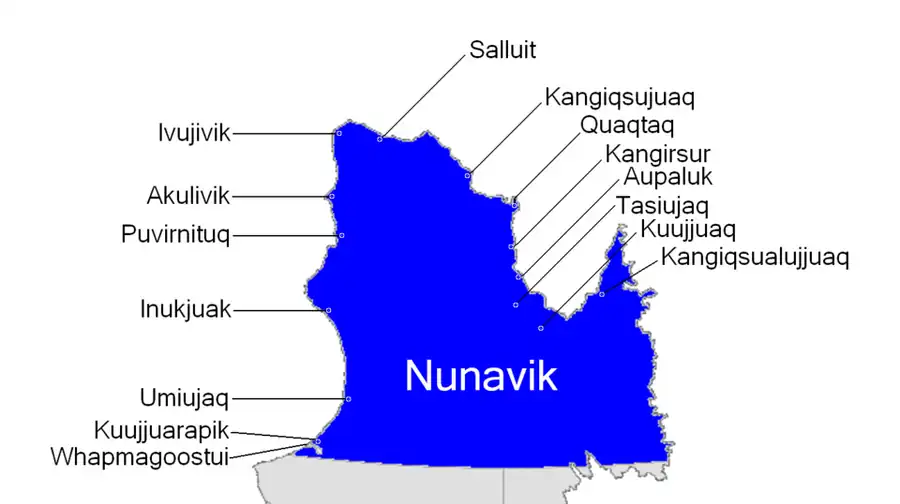
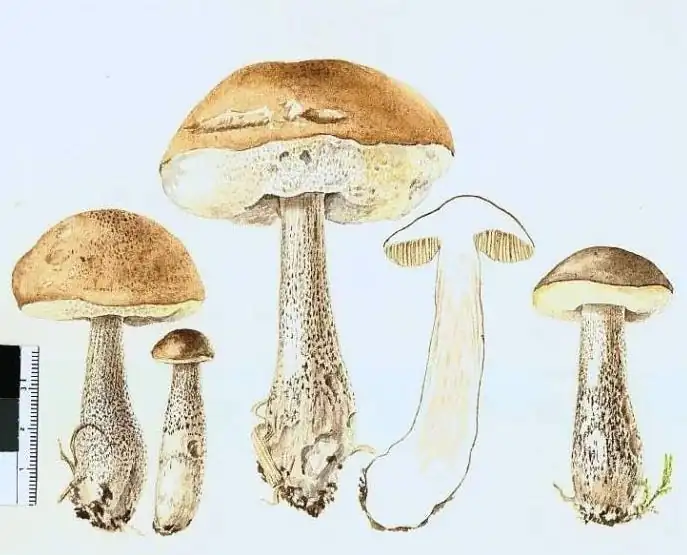
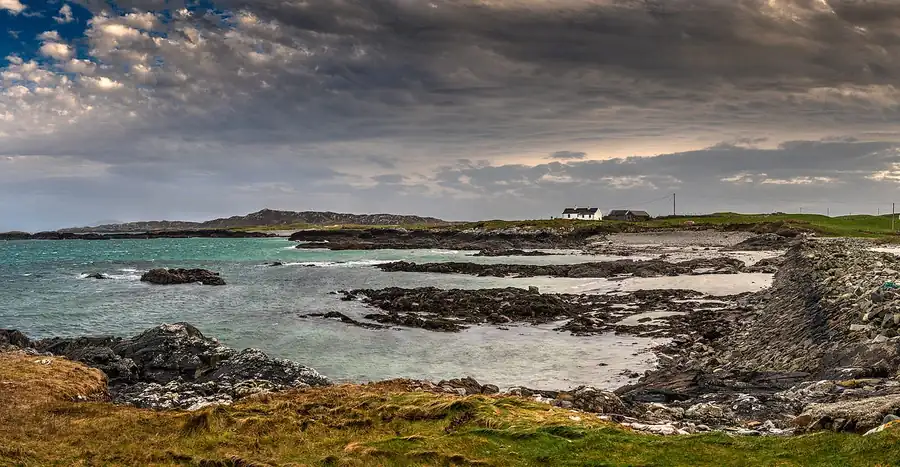
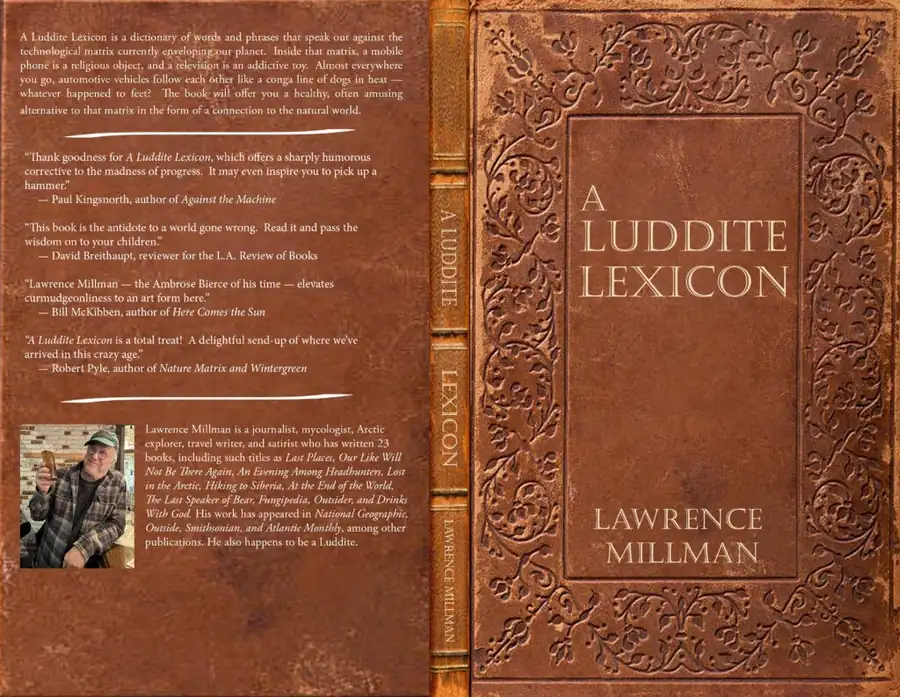
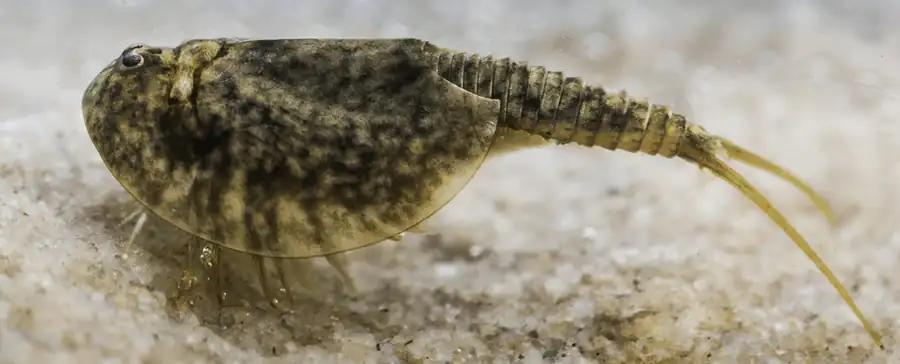
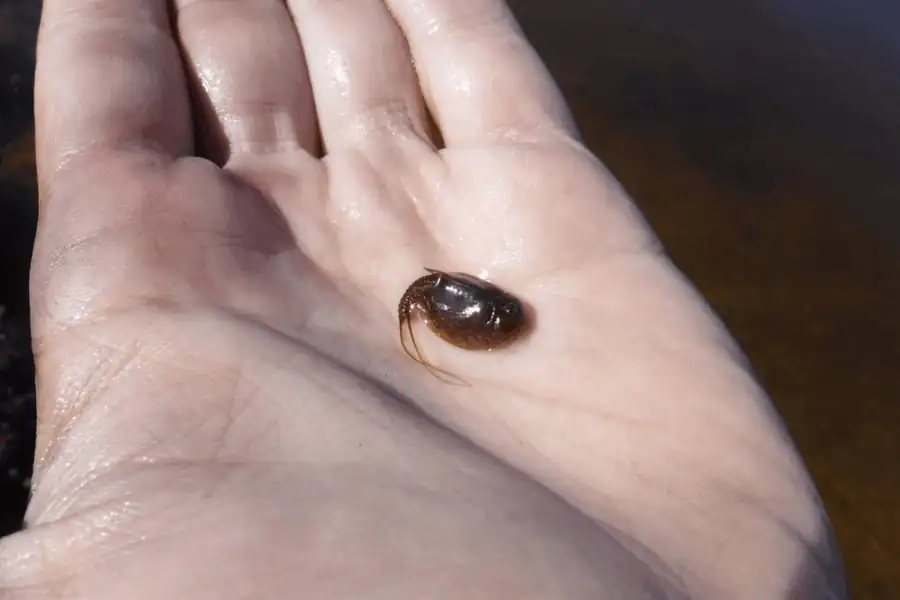
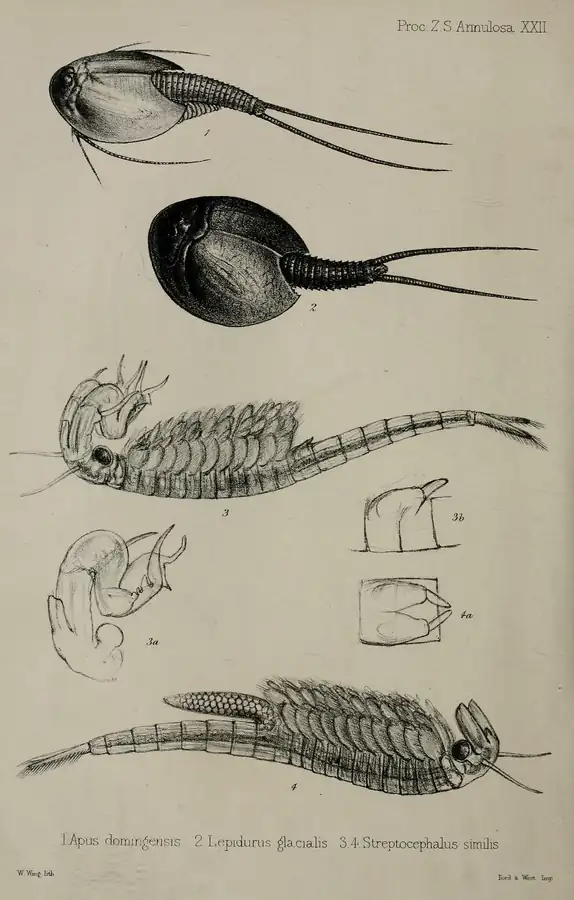
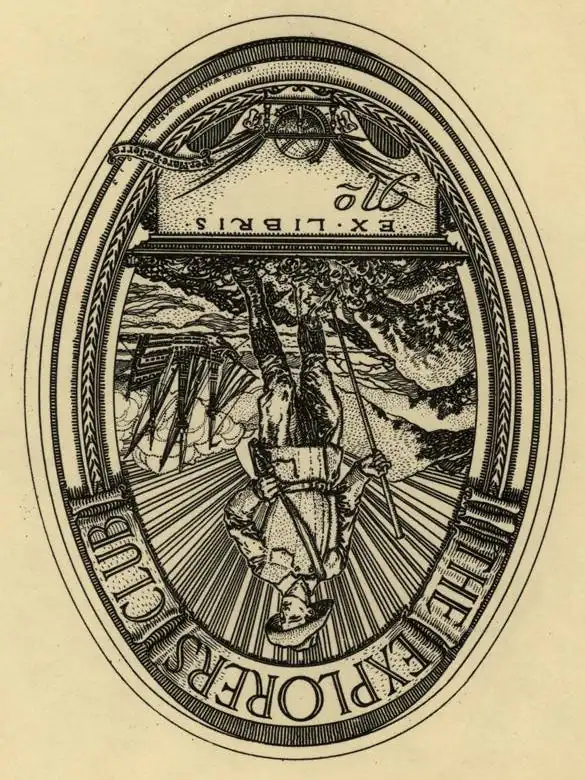

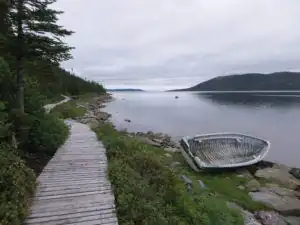
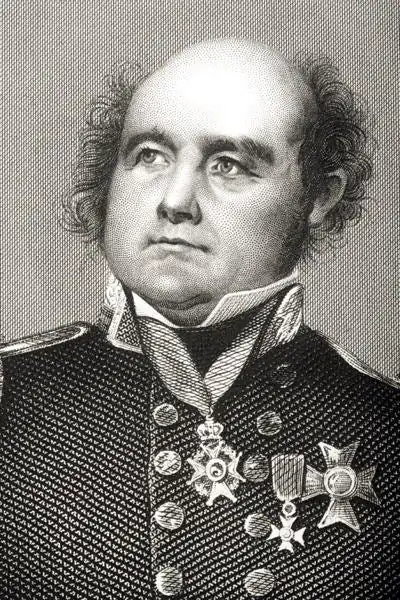
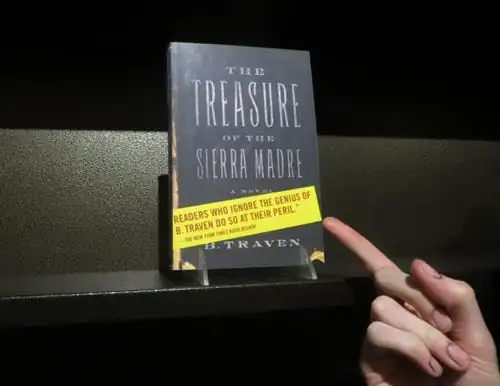
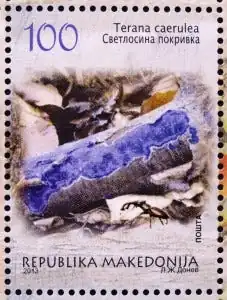
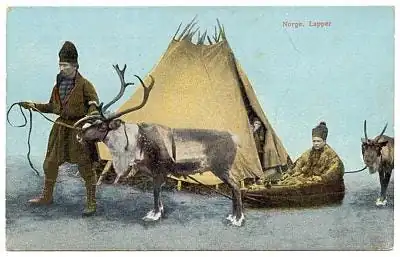
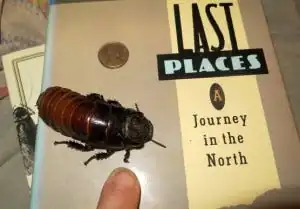
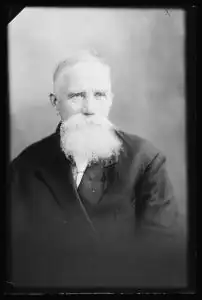

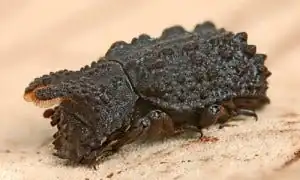
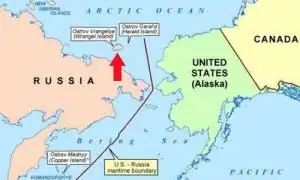

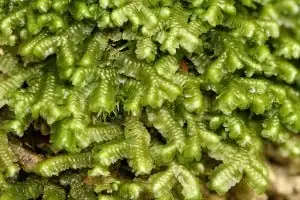
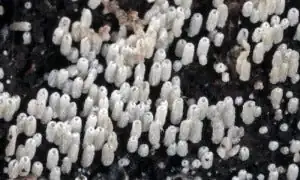
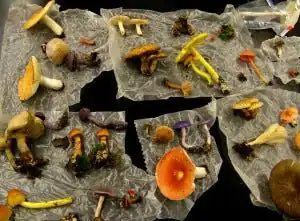
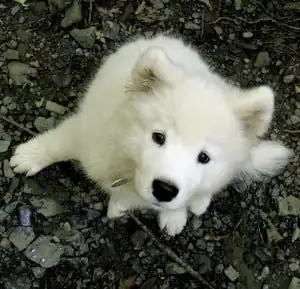
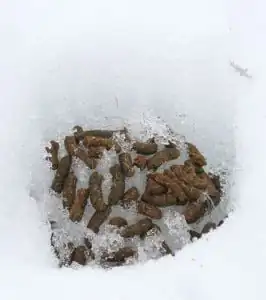

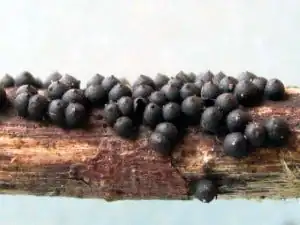
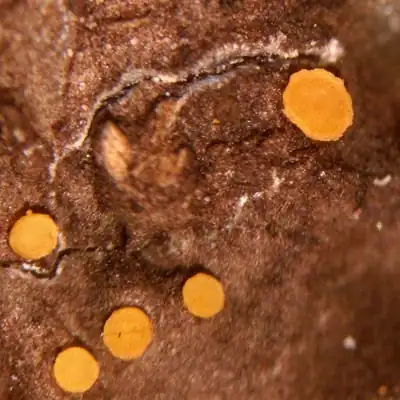
.jpg)