One of my finest moments occured at Na-Bolom in San Christobal de las Casas, Mexico, in the fall of 1992. I had just given a talk about the Labrador Innu in the hacienda’s library, and when I sat down, Trudy Blom, the facility’s 92 year old owner and a prominent ethnographer, said, “You are sitting in B. Traven’s favorite chair.”
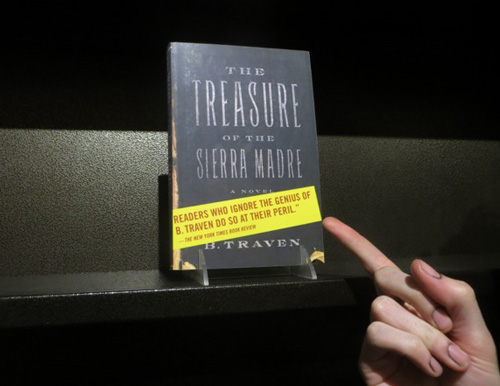 B. Traven was — and is — my favorite fiction writer. If you’ve seen the Humphrey Bogart film The Treasure of the Sierra Madre, then you might know that the film is based on the Traven novel of the same name.
Traven would not have wanted you to know anything about his life, however. He gave a wide berth to interviews, journalists, prizes, and publicity of any sort. Such a wide berth, in fact, that he makes Thomas Pynchon seem like a David Letterman regular.
There are quite a few theories about Traven’s identity. One theory is that Traven was the illegitimate son of the German Kaiser. Another theory is that he was Jack London, who faked his death and became Traven. Given that he, like London, wrote about down-and-outers in remote locations, this theory at least makes literary sense, which is more than I can say for the theory that he was the American writer Ambrose Bierce, who disappeared in Mexico in 1913. Traven died in 1969, and if he were Bierce, he would have been 126 years old at the time of his death.
In all probability, Traven was the German anarchist writer Ret Marut, who, being pursued by the Kaiser’s secret police, fled to Mexico around 1925 and adopted a new name, lest he be extradited to Germany. To consolidate his camouflage, he engaged in a number of manual jobs — cotton picker, oilman, miner, etc — which gave him an excellent window on his subsequent subject matter.
“An author should have no biography other than his books,” Traven wrote, and perhaps we should respect that sentiment rather than try to prove he was really (for example) Flannery O’Connor. Perhaps we should respect that sentiment with all authors, not just Traven…
What of Traven’s books? I’m not easily moved by fiction, but I’ve been powerfully moved by The Bridge in the Jungle every time I’ve read it. This novel concerns the disappearance of a young Indian boy and a small village’s efforts to find him. I also recommend the novella Macario, which describes an elderly Indian man’s encounter with Death right after he’s obtained his life’s wish — a roast turkey.
And if you want a reading experience that out-Kafka’s Kafka, then you should procure a copy of the doubtless autobiographical novel The Death Ship, a tale of a sailor who has lost his identity papers and who signs on a “death ship” — i.e., a ship destined to be sunk at sea so that the owners can claim the insurance money.
Or you could read The Treasure of the Sierra Madre, which, believe or not, is a lot better than the movie.
Speaking of The Treasure of the Sierra Madre, let me conclude this bog entry by quoting a passage from that novel — a passage that should be memorized by the myriad mining companies that have laid waste to natural environments. Howard, a gold miner, says to his fellow miners:
“We’ve wounded this mountain. It’s our duty to close her wounds. It’s the least we can do to show our gratitude for the wealth she’s given us.”
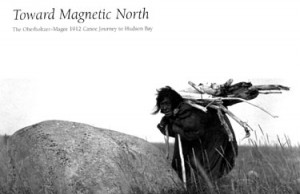 This extremely handsome book which includes photographs, diary jottings, and essays by various hands details explorer conservationist Ernest Oberholtzer’s epic 1912 canoe trip from The Pas, Manitoba, to Hudson Bay. The photos, especially, are remarkable; at once lyrical and austere, they provide an eloquent window on a lost time and a distant place. A “must” for canoeists and Arctic aficionados.
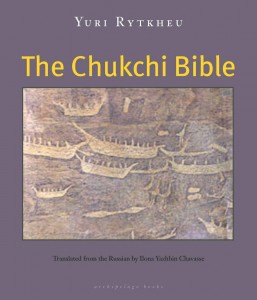 Part myth, part fiction, and part family memoir, The Chukchi Bible details the history of Siberia’s Chukchi from the time when Raven created the world out of gobs of his own shit to the year 1999. But it’s not only a history. It’s also an elegy on the death of a traditional culture due to assaults from the outside world. I have no hesitation in calling the late Yuri Rytkheu’s book a master piece. Urgently recommended to anyone with even the slightest interest in the Arctic or its Native people.
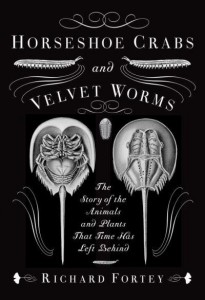 Paleontologist Richard Fortey (author of Life: An Unauthorized Biography) rambles around the world in search of relic species, including onychophorans, gingko trees, lampreys, tuataras, chambered nautiluses, lungfish, ferrerets, horsetails, and echidnas. In his own home in England, he finds an ancient survivor known to everyone — the cockroach. Elegantly written and often very funny, this book provides an excellent complement to Piotr Naskrecki’s primarily photographic work Relics.