Increasingly, I object to collecting mushrooms for the table. I’m not referring to one’s own dinner table. Nor am I referring to commercial pickers, who are collecting for financial purposes rather than the table. Rather, I’m referring to the collection tables that occupy pride of place at local and regional mushroom forays.
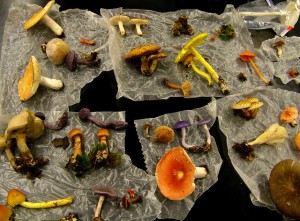
Mushroom foray spoils
But there’s worse to come. All during the foray, the specimens remain on the collection tables, “dehydrated, shriveled, and stanched from releasing spores,” in the words of mycologist Nicholas Money. In the end, virtually all of them will end up being dumped into a garbage bag. Not set aside for an herbarium. Not spreading a single viable spore. Not oven-dried for future study. Simply turned into trash. Hardly a fate any self-respecting mycelium would wish on its fruiting body.
Well, at least that mycelium itself is not disturbed, you might say. But the mycological jury has not yet come up with a palpable verdict on this subject. After all, much of a mycelium’s mass and an undetermined portion of its energy is transferred to its fruiting bodies. To me, this does not call up an image of a happy mycelium…
To collect or not to collect, that is the question. Personally, I think it’s nobler to study specimens in the field than to watch them dessicate on a table. And if they’re studied in the field, mycophiles might learn a bit about how different species relate to their environment. They might also ask themselves some questions: Why are insects congregating on a certain mushroom? What’s the smell of a particular mushroom (dehydrated specimens usually don’t have a smell)? And what the blazes is that tree under which the aforementioned species was growing?
So let’s try to collect less promiscuously. For fruiting bodies mean spores, which mean a potential mycelium, which means more fruiting bodies. Fewer fruiting bodies mean less genetic diversity, which might result in, well, even fewer fruiting bodies. With too few fruiting bodies, there’s always the possibility of a species going extinct. And (to misquote Oscar Wilde) you don’t want to kill off the thing you love,
do you?
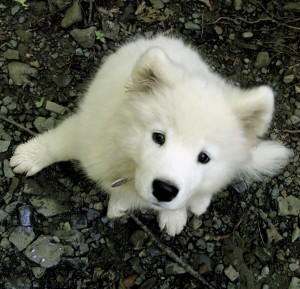 If a sled dog in Greenland has outlived its usefulness, it can be useful again, as cuisine. In fact, the first dog I ever ate was a former Greenland sled dog. The hunter who offered it to me suggested that it was not nearly as good as seal. I had to agree. The meat was tough, stringy, and extremely greasy. It tasted not unlike the way a wet dog smells. Note: As the custom of using sled dogs declines in Greenland, so does the custom of eating them.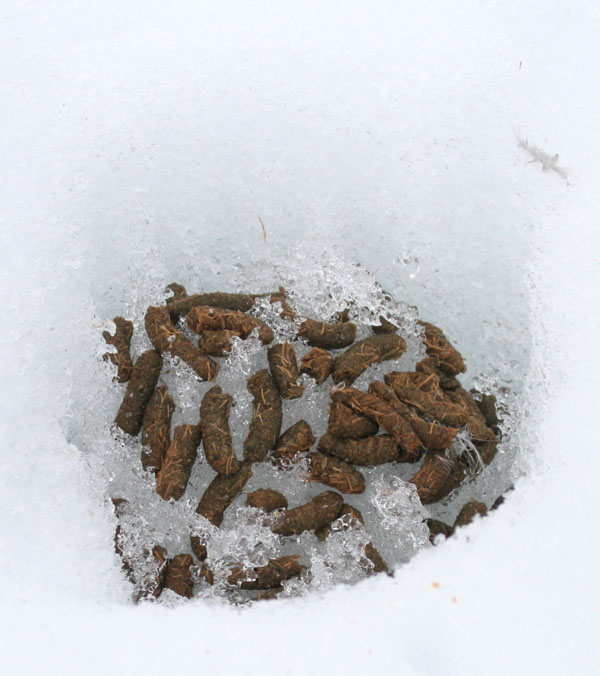
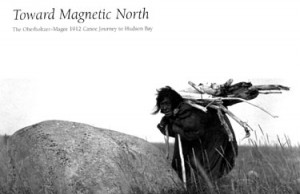 This extremely handsome book which includes photographs, diary jottings, and essays by various hands details explorer conservationist Ernest Oberholtzer’s epic 1912 canoe trip from The Pas, Manitoba, to Hudson Bay. The photos, especially, are remarkable; at once lyrical and austere, they provide an eloquent window on a lost time and a distant place. A “must” for canoeists and Arctic aficionados.
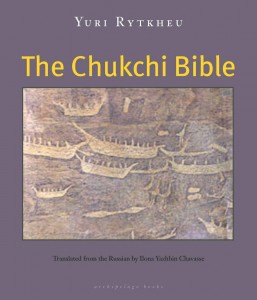 Part myth, part fiction, and part family memoir, The Chukchi Bible details the history of Siberia’s Chukchi from the time when Raven created the world out of gobs of his own shit to the year 1999. But it’s not only a history. It’s also an elegy on the death of a traditional culture due to assaults from the outside world. I have no hesitation in calling the late Yuri Rytkheu’s book a master piece. Urgently recommended to anyone with even the slightest interest in the Arctic or its Native people.
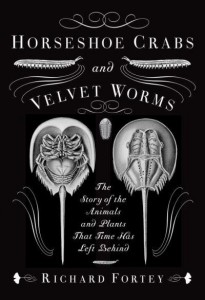 Paleontologist Richard Fortey (author of Life: An Unauthorized Biography) rambles around the world in search of relic species, including onychophorans, gingko trees, lampreys, tuataras, chambered nautiluses, lungfish, ferrerets, horsetails, and echidnas. In his own home in England, he finds an ancient survivor known to everyone — the cockroach. Elegantly written and often very funny, this book provides an excellent complement to Piotr Naskrecki’s primarily photographic work Relics.